
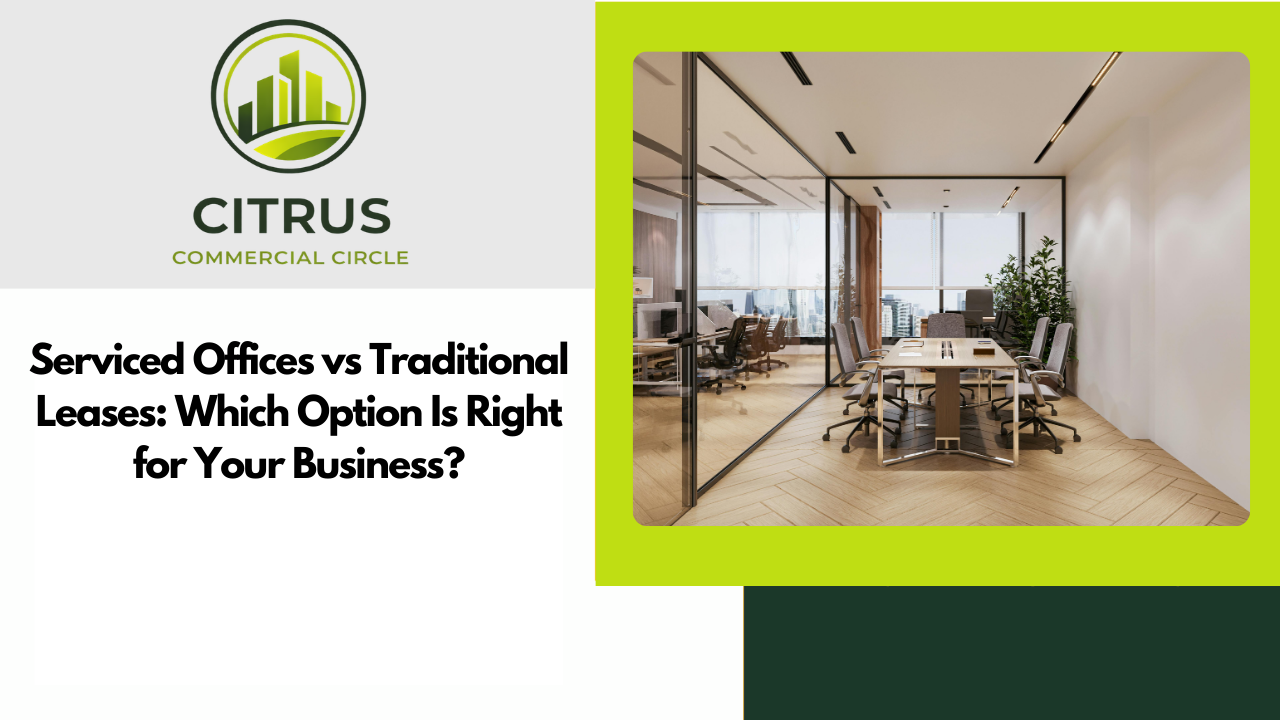
Serviced Offices vs Traditional Leases: Which Option Is Right for Your Business?
Choosing the right workspace in a changing market
The way businesses use office space has evolved significantly in recent years. Hybrid working, flexible teams, and changing cost structures have led many occupiers to rethink what they need from their premises.
One of the most common questions we hear at Citrus Commercial Circle is whether a business should opt for a serviced office or commit to a traditional lease. Both options offer clear advantages, but the right choice depends on your business model, growth plans, and financial priorities.
This guide breaks down the key differences to help you make an informed decision.
1. What is a serviced office?
A serviced office is a fully managed workspace provided on flexible terms. Typically, these offices include:
- Furnished workspaces
- Utilities and business rates
- Internet and telecoms
- Reception and shared facilities
- Cleaning and maintenance
Tenants pay a single monthly fee, which covers most operational costs. Agreements are usually short-term and flexible, often ranging from monthly licences to 12-month commitments.
2. What is a traditional lease?
A traditional office lease is a longer-term agreement directly between landlord and tenant. It typically involves:
- A fixed lease term (often 3–10 years)
- Separate responsibility for utilities, rates, and services
- Greater control over layout and fit-out
- Full repairing and insuring obligations in many cases
While less flexible, traditional leases often provide better long-term value for established businesses.
3. Flexibility versus stability
The most significant difference between the two options is flexibility.
Serviced offices offer:
- Short-term commitments
- Easy expansion or downsizing
- Minimal upfront investment
- Quick move-in capability
Traditional leases offer:
- Long-term stability
- Greater control over premises
- Fixed occupational base
- Predictable occupancy over time
For start-ups or businesses in transition, flexibility is often the priority. For established companies, stability may be more valuable.
4. Cost considerations
At first glance, serviced offices can appear more expensive. However, it is important to consider what is included.
Serviced office costs:
- All-inclusive monthly fee
- No initial fit-out costs
- Minimal capital expenditure
Traditional lease costs:
- Rent plus business rates and utilities
- Service charges (where applicable)
- Fit-out and furnishing costs
- Maintenance and repair responsibilities
Over the long term, traditional leases often provide better value per square foot. However, serviced offices can be more cost-effective in the short term due to lower upfront expenditure.
5. Control and customisation
Businesses that require a tailored working environment often favour traditional leases.
With a leased office, tenants can:
- Design and configure their own layout
- Install branding and specialist equipment
- Adapt the space as their operations evolve
Serviced offices, while convenient, usually offer limited flexibility in layout and branding. They are best suited to businesses that can operate within a standardised environment.
6. Location and availability
Serviced offices are typically located in:
- City centres
- Business parks
- Purpose-built office hubs
They are designed to offer convenience and accessibility, often in high-demand areas.
Traditional leased offices, on the other hand, are available across a wider range of locations, including:
- Town centres such as Bury and Middleton
- Secondary office locations with lower costs
- Mixed-use commercial buildings
- Edge-of-town developments
This wider availability often provides more choice and better value for businesses willing to look beyond prime city-centre space.
7. Suitability for different business types
Each option suits different types of occupiers.
Serviced offices are ideal for:
- Start-ups and new businesses
- Small teams or remote-first companies
- Businesses testing new markets or locations
- Companies requiring short-term flexibility
Traditional leases are better suited for:
- Established SMEs
- Growing businesses with stable operations
- Companies requiring bespoke fit-out
- Businesses looking to control long-term costs
At Citrus Commercial Circle, we often help businesses transition from serviced offices into leased premises as they grow and require more space or control.
8. Image and client perception
The type of office you choose can also influence how your business is perceived.
Serviced offices often provide:
- Modern, well-presented environments
- Shared reception and meeting facilities
- Professional first impressions
Traditional offices allow for:
- Full branding and identity
- Dedicated premises
- Greater control over client experience
For some businesses, particularly those dealing directly with clients, having a fully branded and independent space can be a significant advantage.
9. Long-term strategy
Choosing between serviced offices and traditional leases is not just about immediate needs. It should also reflect your long-term business strategy.
Consider:
- Expected growth over the next 3–5 years
- Staffing levels and operational structure
- Financial planning and cost control
- Desire for flexibility versus permanence
Many businesses begin in serviced offices and transition to traditional leases as they expand. Others maintain a hybrid approach, combining flexible workspace with more permanent operational sites.
10. How Citrus Commercial Circle can help
Navigating the office market requires a clear understanding of both options and how they align with your business goals.
At Citrus Commercial Circle, we support occupiers by:
- Assessing their current and future space requirements
- Identifying suitable properties across the North West
- Advising on lease terms and cost structures
- Negotiating favourable agreements
- Ensuring a smooth and efficient process from start to finish
Our local expertise ensures that businesses find the right premises, whether that is a flexible serviced office or a long-term leased space.
Final thoughts
There is no one-size-fits-all answer when choosing between serviced offices and traditional leases. The right decision depends on your business stage, financial position, and operational needs.
Serviced offices offer flexibility and convenience, while traditional leases provide control, stability, and long-term value. Understanding these differences allows businesses to choose the option that supports both immediate operations and future growth.
At Citrus Commercial Circle, we are proud to help businesses across Bury, North Manchester, and the wider region make informed property decisions with confidence.
Based in Bury. Active across North Manchester. Always on your side.
Call us today: 0161 383 1806
Email: info@citruscommercialcircle.co.uk
Visit: citruscommercialcircle.co.uk
Let’s unlock the full potential together.
Citrus Commercial Circle – Where standards meet success.