

Citrus Blog
Stay ahead of the curve with insights from Citrus Commercial Circle
Category Selection
Explore expert insights on buying, selling, financing, and the latest property market trends — all in one place
Why Commercial Property Investors Should Check Restrictive User Clauses Before Buying
Introduction When purchasing a tenanted commercial property, investors usually pay close attention to rental income, lease length and tenant financial strength. These are important considerations. However, another lease provision can have a significant effect on the property’s future flexibility and investment performance. The permitted user clause. This provision establishes how the tenant is contractually permitted…

What Happens Between Accepting a Commercial Property Offer and Completing the Sale?
Introduction A commercial property owner receives an offer. The price is acceptable, the buyer appears serious and both parties are keen to proceed. For many sellers, this feels like the most important milestone in the transaction. However, accepting an offer is only one stage of selling commercial property. Between agreeing a price and completing the…

Commercial Property Myth: A Newly Refurbished Unit Needs No Further Investigation
Introduction A commercial property has been newly refurbished. The walls are freshly painted, the lighting has been upgraded and the building looks clean and modern. The landlord describes it as ready for immediate occupation. For a prospective tenant or investor, the property may appear to be a straightforward choice. After all, if substantial money has…

How to Assess Whether a Commercial Property Extension Is Financially Worthwhile
Expanding an existing commercial building can appear to be a straightforward way to increase its value. A landlord owns a 10,000 sq ft industrial unit with unused land alongside it. Rather than purchasing another property, they consider constructing a 5,000 sq ft extension. The logic seems simple: more lettable floor space should mean more rental…

Why North Manchester’s Established Employment Areas Continue to Attract Commercial Businesses
When businesses search for commercial premises, modern developments and newly constructed industrial parks often receive considerable attention. New buildings can offer excellent specifications, contemporary facilities and attractive layouts. However, some of the most practical commercial locations across North Manchester are not new at all. They are established employment areas that have supported businesses for decades….
How to Budget for the True Cost of Occupying Commercial Premises
Why the Advertised Rent Is Only the Beginning A business finds a commercial unit advertised at £2,000 per calendar month. The location is right, the building is suitable and the rent appears affordable. But six months after moving in, the business discovers that the actual cost of occupation is significantly higher than expected. There are…

How Commercial Landlords Can Prepare for a Property Valuation
Why Preparation Matters Before a Commercial Property Valuation A commercial landlord may require a property valuation for several reasons. Perhaps they are considering refinancing, selling, restructuring a portfolio or reviewing the performance of an investment. Whatever the reason, the valuation can influence important financial decisions. Yet many landlords approach the process without preparing the information…

Could Autonomous Vehicles Change the Design of Industrial Estates?
The Next Change in Industrial Property Could Happen Outside the Warehouse When people discuss the future of industrial property, attention often turns to robotics, artificial intelligence and automated warehouses. But another technological development could eventually change the way industrial estates are designed: autonomous vehicles. Self-driving delivery vehicles, automated yard tractors and driverless logistics equipment are…

Why Commercial Property Investors Should Check Water Supply and Trade Effluent Requirements Before Buying
An Overlooked Part of Commercial Property Due Diligence When investors inspect commercial property, they usually focus on the obvious features. They examine: But another important consideration is often overlooked. Water supply and wastewater disposal. For some commercial occupiers, these services are relatively straightforward. An office may only need water for: But other businesses have much…

How Commercial Rent Negotiations Really Work
A commercial property is advertised at: £30,000 per annum. A business likes the unit. So does the tenant simply offer £25,000, the landlord asks for £30,000 and eventually everybody agrees at £27,500? Sometimes. But commercial property negotiations are rarely just a debate about one number. A landlord might accept a lower rent in exchange for:…
“Long Commercial Leases Are Always Better”: Why Landlords and Investors Need to Look Deeper
Imagine two commercial property investments. Property A Tenant has 12 years remaining on the lease. Property B Tenant has five years remaining. Which is the better investment? At first glance, many investors would immediately choose Property A. Twelve years of contracted income sounds much safer than five. And sometimes it is. But lease length on…
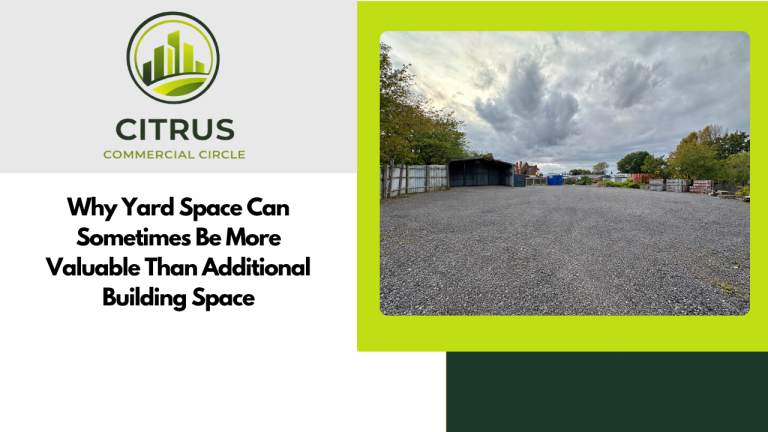
Why Yard Space Can Sometimes Be More Valuable Than Additional Building Space
When commercial property is advertised, one number normally receives most of the attention: The building’s square footage. 10,000 sq ft warehouse. 20,000 sq ft industrial unit. 30,000 sq ft distribution building. But for some occupiers, another part of the property can be just as important — and occasionally more valuable: The yard. A large warehouse…

Why Local Workforce Catchments Matter When Choosing Commercial Property in North Manchester
Businesses searching for commercial property often begin with three questions: How much space is there? How much is the rent? How close is it to the motorway? All three matter. But there is another question that can have just as much influence on whether a location works: Can your employees actually get there? Commercial property…

Moving Commercial Premises Without Disrupting Your Business
Moving house can be stressful. Moving an operating business is another level entirely. A commercial relocation may involve: And throughout the move, the business is still expected to operate. Customers do not necessarily stop placing orders because the warehouse is moving. Suppliers still need somewhere to deliver. Employees still need to know where to work….

What Makes a Commercial Tenant Want to Renew Their Lease?
Finding a good commercial tenant takes time. Keeping one can be considerably more valuable. When an established tenant renews its lease, the landlord may avoid: The tenant also avoids the disruption and cost of relocating. On the surface, that sounds like an obvious win for both sides. Yet tenants still leave buildings they have occupied…

How Same-Day Delivery Is Changing Warehouse Location Decisions
For decades, warehouse property decisions were heavily influenced by a relatively simple objective: Find enough space at the right rent with good motorway access. Those fundamentals still matter. But modern delivery expectations are adding another layer. Customers increasingly expect businesses to process orders quickly, provide accurate delivery information and, in some markets, offer next-day or…

Why Commercial Property Investors Should Check Rights of Light Before Buying Development Property
An investor finds a commercial site with an obvious development opportunity. Perhaps there is potential to: The numbers look attractive. The site is acquired. Architects begin designing the development. Planning work progresses. Then somebody raises a question that had barely appeared in the original appraisal: What about the neighbouring property’s rights of light? For development…

What Does a Commercial Property Agent Actually Do for a Landlord?
Put a commercial property online. Take a few photographs. Arrange some viewings. Find a tenant. Job done. That is sometimes how commercial agency looks from the outside. But effective commercial property agency involves considerably more than advertising a building. For a landlord, the real objective is not simply to generate enquiries. It is to secure…

“The Tenant Pays for Everything”: The Commercial Lease Myth Explained
Commercial landlords sometimes hear a simple description of a commercial lease: “Don’t worry — the tenant pays for everything.” It sounds attractive. Rent arrives each month. The tenant maintains the building. The tenant pays the running costs. The landlord simply collects the income. But commercial property is rarely that simple. Some commercial leases can place…

How to Identify a Commercial Property With Hidden Development Potential
Some commercial properties are valuable because of what already exists. Others are interesting because of what could exist in the future. A warehouse might produce a perfectly respectable rental income today, yet the wider site could contain opportunities that are not immediately obvious. An older commercial building might have: The opportunity is not necessarily to…

What Makes a Successful North Manchester Business Park?
A collection of commercial buildings does not automatically create a successful business park. Two estates can sit only a few miles apart. They can offer similar: Yet one remains busy, attracts growing businesses and retains tenants for years. The other experiences repeated vacancies and constant tenant turnover. Why? Because businesses do not occupy buildings in…

When Is It Time to Move From Home Working Into Commercial Premises?
Many successful businesses begin somewhere very ordinary. A spare bedroom. A garage. A dining-room table. A rented storage unit. For a new business, working from home can make perfect financial sense. Overheads remain low, there is no commercial rent to pay and the owner can concentrate on building the company before committing to additional property…

Why AI Growth Could Create New Demand for Commercial Property
Artificial intelligence is usually discussed as a technology story. But it is increasingly becoming a property story too. AI may feel digital, but the infrastructure behind it is extremely physical. It requires: As AI adoption grows, these requirements could influence demand for certain types of commercial property across the UK. The UK Government has already…

When Should a Landlord Split a Large Commercial Unit?
A landlord owns a 20,000 sq ft industrial building. It is vacant. Enquiries arrive, but most applicants want: Very few need the whole building. The obvious question appears: Should we split it? Subdividing a large commercial property can sometimes transform an underperforming building. Instead of waiting for one large tenant, the landlord can potentially create…

Why Commercial Property Deals Fall Through – and How Landlords and Tenants Can Reduce the Risk
A commercial property can be marketed successfully. The right tenant makes an offer. Terms are negotiated. The landlord accepts. The property is marked “Under Offer.” Everyone assumes the deal is nearly finished. Then, several weeks later, it collapses. Commercial property transactions can fall through for many reasons, and sometimes the problem has very little to…

“More Square Feet Means More Value”: Why Commercial Property Doesn’t Work That Way
A 20,000 sq ft commercial property must be worth more than a 10,000 sq ft property. Right? Not necessarily. Square footage is one of the most visible measurements in commercial property. It appears in: And it is clearly important. But floor area alone does not determine commercial property value. A smaller property can sometimes command:…

The M60 Effect: Why Motorway Connectivity Shapes Commercial Property Demand Across North Manchester
When businesses search for commercial property, one phrase appears repeatedly: “Excellent motorway access.” It appears in: Sometimes so frequently that it becomes background noise. But for commercial property across North Manchester, motorway connectivity genuinely can have a significant influence on how businesses choose locations. The M60 forms a strategic orbital route around Greater Manchester and…

How to Identify a Commercial Property With Hidden Development Potential
Some of the most interesting commercial property opportunities do not look particularly exciting at first. An investor might see: and simply assess what is already there. But another investor may look at exactly the same property and ask a different question: What else could this site become? That difference in perspective can be significant. Commercial…

Renting Your First Commercial Property: What Business Owners Should Know Before Signing a Lease
Moving into your first commercial property can feel like a major milestone. Perhaps the business started: Now the company needs somewhere of its own. For many growing businesses, this is an exciting stage. It can also be one of the first times the owner commits the business to a substantial long-term financial obligation. Commercial property…

How to Make an Older Industrial Unit Compete With New-Build Stock
A landlord owns a 30-year-old industrial unit. A few miles away, a brand-new industrial estate opens. The new units have: The landlord’s immediate reaction may be: “How can our older building possibly compete?” The answer is not necessarily to try to turn an older industrial property into a new-build warehouse. That can be expensive and…

Why AI Growth Could Create New Demand for Commercial Property
Artificial intelligence is usually discussed as a digital technology. Software. Algorithms. Data. Automation. But behind almost every digital system sits something physical. Computers need electricity. Servers need buildings. Technology companies need employees. Automated businesses need warehouses, workshops and infrastructure. This means the continued growth of artificial intelligence could eventually influence commercial property demand in ways…

Why Commercial Property Investors Should Check for Japanese Knotweed and Invasive Plants Before Buying
Commercial property investors are used to investigating buildings. They inspect: But sometimes an important property risk is growing outside the building. Literally. Japanese knotweed is one of the best-known invasive plants in the UK and has become a familiar concern in property transactions. Commercial investors can sometimes assume it is primarily a residential mortgage issue….

Why Commercial Property Deals Fall Through – And What Landlords and Tenants Can Do to Keep Them Moving
A commercial property goes under offer. The rent is agreed. The tenant wants the building. The landlord wants the tenant. Heads of Terms are issued. Everyone assumes the difficult part is over. Then, six weeks later, the transaction collapses. For landlords and businesses, this can be one of the most frustrating parts of the commercial…

“More Square Feet Means More Value”: Why Commercial Property Doesn’t Work That Way
Commercial property is measured in square feet. So it is easy to assume that more square feet automatically means more value. A 20,000 sq ft building must be worth more than a 10,000 sq ft building. A 5,000 sq ft industrial unit must generate more rent than a 3,000 sq ft unit. A larger commercial…

When Does Converting a Commercial Building Make Financial Sense?
An investor buys an older commercial building. The obvious question is often: “What could this become?” Could an old warehouse become smaller industrial units? Could redundant offices become residential accommodation? Could an oversized retail building become mixed-use? Could an underperforming commercial property be repositioned rather than simply re-let in its existing form? Across Bury, North…

The M60 Effect: Why Motorway Connectivity Shapes Commercial Property Demand Across North Manchester
Commercial property is often described in terms of postcode. Bury. Oldham. Rochdale. Salford. North Manchester. But businesses choosing industrial and warehouse premises frequently think differently. They think in: Minutes. How quickly can a van reach the motorway? How long does a delivery take to Manchester city centre? How easily can an HGV reach the site?…
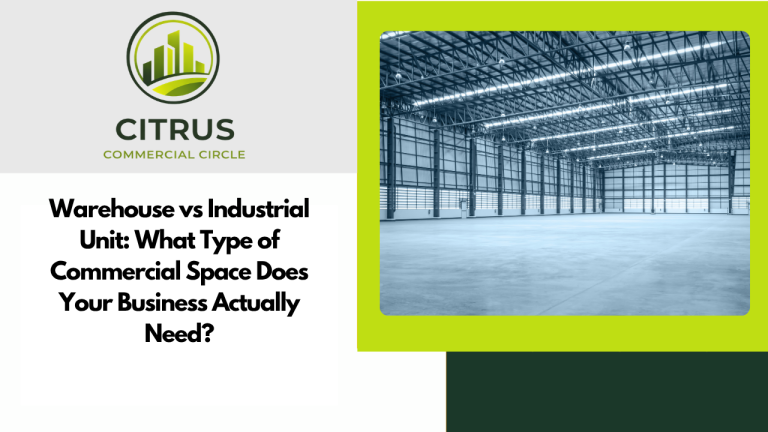
Warehouse vs Industrial Unit: What Type of Commercial Space Does Your Business Actually Need?
A business starts searching for commercial property and tells the agent: “We need a warehouse.” That sounds straightforward. But once the conversation begins, it often becomes clear that the business does not simply need somewhere to store goods. It may also need: At that point, the requirement is no longer just about finding a certain…

Why Some Commercial Properties Get Plenty of Viewings but Never Receive an Offer
A commercial property receives enquiry after enquiry. The agent arranges viewings. Businesses walk around the building. They ask questions. They request further information. Then nothing happens. No offer. No negotiation. No deal. For a commercial landlord, this can be more frustrating than receiving very few enquiries in the first place. The marketing appears to be…

What Electric Commercial Fleets Could Mean for Industrial Estates
For decades, commercial property investors assessing an industrial estate could concentrate on familiar fundamentals. Location. Motorway access. Yard space. Parking. Loading. Power. Those fundamentals still matter. But one of them is beginning to take on a much wider significance: Power. As businesses gradually introduce electric vans, company cars and other electric commercial vehicles, the relationship…
Why Commercial Property Investors Should Check Lifts Before Buying a Building
Commercial property investors spend considerable time examining roofs, leases, rents and tenant covenants. But in a multi-storey building, another piece of infrastructure can have a surprisingly large influence on value: The lift. A lift can make upper floors commercially viable. It can improve accessibility. A goods lift can allow businesses to move stock between floors….

“A Vacant Commercial Unit Just Needs a Lower Rent”: Why That Isn’t Always True
A commercial property has been empty for several months. There have been enquiries. Perhaps even some viewings. But nobody has taken it. The obvious reaction can be: “The rent must be too high.” Sometimes that is correct. Price matters. Commercial occupiers have budgets, and an asking rent that sits materially above the local market can…

Why Heads of Terms Matter More Than Many Commercial Tenants Realise
A commercial tenant finds the right property. The rent works. The location works. The landlord accepts the offer. At that point, many occupiers understandably think the difficult part is over. It is not. One of the most important stages of the commercial property transaction usually comes next: Heads of Terms. Heads of Terms are often…

Why Old Mills Are Still Creating New Commercial Property Opportunities
Across Greater Manchester and the wider North West, old mills remain one of the most distinctive parts of the commercial property landscape. For some investors, they can look like difficult buildings. They may be large. They may be old. They may require substantial maintenance. Their layouts can be unusual. Their energy performance may need improvement….

Why Rochdale, Oldham and North Manchester Continue to Matter for Industrial Property
When people discuss Greater Manchester commercial property, some locations receive most of the headlines. Manchester city centre. Trafford Park. Major logistics developments along the motorway network. But a large part of Greater Manchester’s everyday industrial economy operates elsewhere. Rochdale. Oldham. Bury. North Manchester. These areas accommodate thousands of businesses that manufacture, repair, store, distribute, build…

Should You Refurbish a Commercial Unit Before Marketing It?
A commercial unit becomes vacant. The previous tenant has moved out. There are marks on the walls. A few lights no longer work. The offices look dated. The roller shutter is functional but tired. The landlord now faces a familiar question: Should we refurbish the property before putting it on the market, or advertise it…

Should Your Business Take More Commercial Space Than It Currently Needs?
One of the hardest property decisions for a growing business is deciding how much space to take. Choose premises that are too small and the business may outgrow them quickly. Choose premises that are too large and the company could spend years paying for space it does not actually use. There is no universal answer….

How Robotics and Automation Are Changing What Businesses Need From Industrial Property
The industrial property market has traditionally been driven by relatively straightforward requirements. Businesses needed enough floor space. A good loading door. Three-phase power. A yard. Parking. Reasonable access to the motorway network. All of those features still matter. But the way businesses use industrial buildings is changing. Automation, robotics, artificial intelligence and increasingly sophisticated warehouse-management…

Why Commercial Property Investors Should Check Air Conditioning, Heating Plant and F-Gas Compliance Before Buying
When investors inspect commercial property, heating and air conditioning can easily become an afterthought. The building feels warm. The air conditioning switches on. There are several units mounted on the roof. Everything appears to work. So attention moves towards rent, leases, tenants and valuation. But heating, ventilation and air-conditioning equipment can represent a significant part…

What Actually Happens After You Make an Offer on a Commercial Property?
Finding the right commercial property can take weeks or months. You search the market, compare locations, arrange viewings and finally find premises that appear to work for your business. Then comes the moment that feels like the biggest step: you make an offer. But what actually happens next? Unlike buying something at an advertised price…

“Commercial Property Is Passive Income”: Is It Really?
Commercial property is often described as a passive investment. Buy a building. Find a tenant. Collect the rent. Repeat. From the outside, it can look remarkably straightforward. A commercial property occupied on a long lease can certainly produce relatively predictable income, and in some circumstances it may require less day-to-day involvement than other types of…

Why Bury Remains an Important Commercial Location for North Manchester Businesses
Bury offers something increasingly valuable: access to Manchester without needing to be in Manchester city centre When businesses consider commercial property in Greater Manchester, attention often goes immediately to Manchester city centre, Trafford Park or the larger established industrial locations. But commercial property decisions are rarely about prestige alone. Businesses need premises that work. They…

How Commercial Property Investors Can Spot Underused Land Within Existing Sites
Buying more land is not always the only way to create more commercial property. Sometimes the opportunity is already sitting inside an existing investment. An oversized car park. A redundant storage compound. An unusually wide yard. A strip of land behind a warehouse. An unused corner of an industrial estate. A former service area that…

Why Growing Businesses Often Outgrow Their Commercial Premises Before They Realise It
Business growth is usually something to celebrate. More customers. More employees. More stock. More equipment. More orders. But growth creates one problem that many businesses fail to anticipate: their premises stop working. A warehouse that felt enormous three years ago suddenly has pallets filling the aisles. An office designed for eight people now accommodates fifteen….