
Why Commercial Property Investors Should Investigate Contaminated Land Before Buying
What happened on the site 50 years ago could still affect its value today
Commercial property investors spend a great deal of time looking forward.
What rent could the property achieve? Could the building be extended? Is there redevelopment potential? What might the asset be worth in ten years?
But with some commercial properties, investors also need to look backwards.
What was previously carried out on the site?
Former factories, engineering works, petrol stations, chemical businesses, vehicle workshops and other historic industrial activities can potentially leave contamination within land or groundwater.
For investors across Bury, North Manchester and the wider North West—areas with a substantial industrial heritage—environmental due diligence can therefore be particularly important.
A building may look perfectly normal above ground while significant issues remain beneath it.
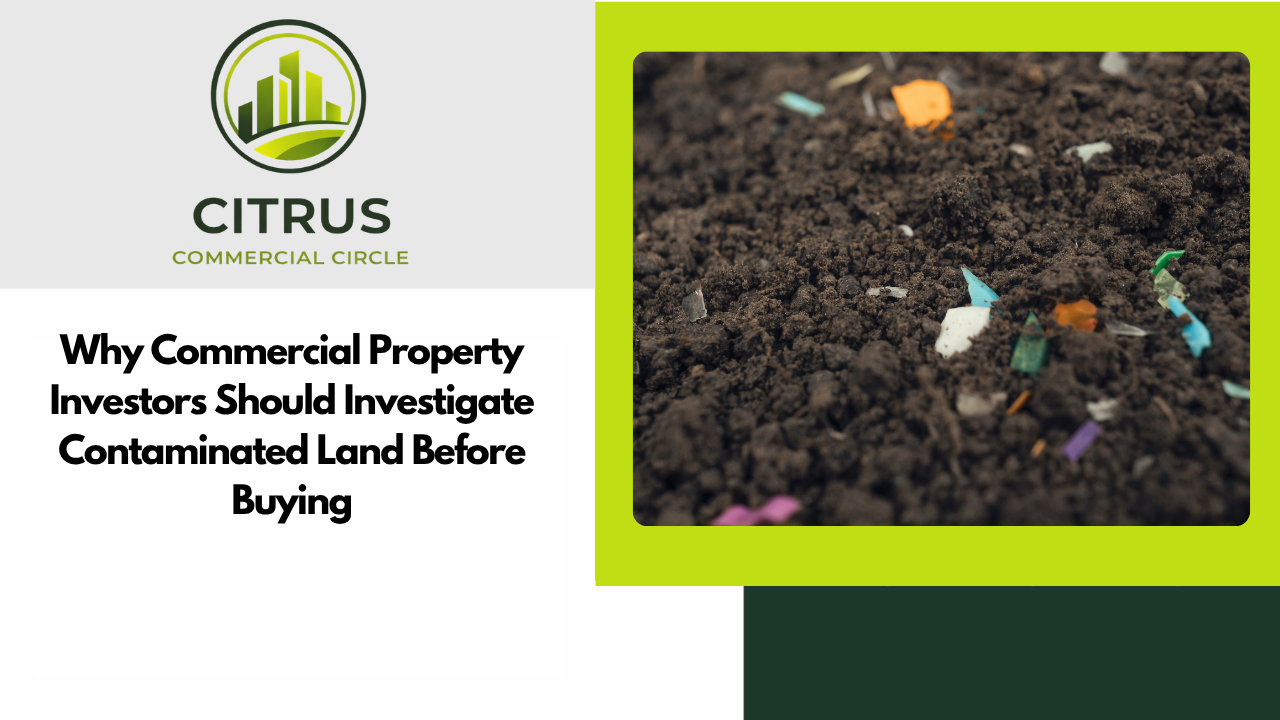
What is contaminated land?
Land can become contaminated when substances are introduced into the soil, groundwater or surrounding environment.
Potential contaminants can vary considerably depending on historic activity.
Examples may include:
- Oils and fuels
- Solvents
- Heavy metals
- Chemicals
- Asbestos-containing materials
- Hydrocarbons
- Industrial waste
The existence of historic industrial use does not automatically mean a site is dangerously contaminated.
It simply means further investigation may sometimes be appropriate.
Why should a commercial property investor care?
Contamination can potentially affect several aspects of an investment.
These may include:
- Development potential
- Property value
- Finance
- Insurance
- Planning
- Future sale
- Remediation costs
If significant contamination is discovered after completion, resolving it can potentially be expensive.
Understanding the risk before purchasing allows the investor to make a more informed decision.
North Manchester has a substantial industrial history
Greater Manchester played an important role in Britain’s industrial development.
Across Bury and North Manchester, historic land uses have included:
- Textile manufacturing
- Engineering
- Metalworking
- Chemical processes
- Transport operations
- Warehousing
Many former industrial sites have since been successfully redeveloped and continue to support valuable commercial and residential property.
Historic industrial use should therefore be treated as a due-diligence consideration rather than an automatic reason to reject a property.
Start with the site’s history
Understanding previous land uses can provide useful clues.
An investor might investigate whether the property was historically used as:
- A petrol station
- A factory
- A vehicle depot
- An engineering works
- A landfill
- A chemical facility
Historic mapping and environmental searches can help identify potentially relevant former uses.
Environmental searches can flag potential risks
Commercial property solicitors can arrange environmental searches as part of the conveyancing process.
These may consider information relating to matters such as:
- Historic land use
- Flooding
- Landfill
- Potential contamination
The search may recommend further investigation where appropriate.
Investors should read the results rather than treating searches as paperwork that simply needs to be completed for the lender.
A desktop assessment may be the first specialist stage
Where potential contamination is identified, environmental consultants may initially undertake a desk-based assessment.
This can involve reviewing:
- Historic maps
- Previous uses
- Geological information
- Environmental records
- Surrounding land
The objective is to identify possible sources of contamination and understand whether more detailed investigation is justified.
Sometimes physical investigation is required
Where sufficient risk exists, further investigation might involve:
- Boreholes
- Trial pits
- Soil sampling
- Groundwater testing
- Laboratory analysis
This provides far more specific information about actual site conditions.
The appropriate level of investigation depends on the property and intended strategy.
Development can expose problems that occupation never revealed
An existing warehouse may have operated successfully for decades without any obvious contamination problem.
Then an investor decides to demolish it and construct a new development.
Groundworks can expose historic materials that previously remained undisturbed.
This is why environmental risk can become particularly important for investors purchasing property for redevelopment.
Planning authorities may require investigation
Contamination can become a planning consideration when land is redeveloped or its use changes.
Planning authorities may require environmental investigation and, where necessary, remediation before development proceeds.
The Planning Portal provides general information on the planning system, while individual requirements should be confirmed with the relevant local authority.
Residential conversion can increase sensitivity
Suppose an investor purchases an old commercial building with the intention of converting the site to residential accommodation, subject to planning and other approvals.
The future occupants may have greater exposure to soil through:
- Gardens
- Landscaping
- Outdoor areas
The acceptable environmental position may therefore differ from that of an operational warehouse with extensive concrete hardstanding.
The intended future use matters.
Petrol stations deserve particular attention
Former petrol filling stations can involve specific environmental considerations because of historic underground fuel infrastructure.
Issues might potentially involve:
- Tanks
- Fuel lines
- Hydrocarbon contamination
Many former petrol stations have been successfully remediated and redeveloped.
But investors should understand what infrastructure existed, whether it was removed correctly and what environmental records are available.
Vehicle workshops can also create environmental risks
Longstanding vehicle repair businesses may have historically handled:
- Oils
- Fuels
- Solvents
- Batteries
- Chemicals
Again, this does not mean every workshop site is contaminated.
It simply makes historic use relevant to due diligence.
Asbestos is related but different
Asbestos is commonly encountered within older commercial buildings.
It is primarily a building-management and health-and-safety issue rather than exactly the same as contaminated soil.
However, demolition of older industrial buildings can potentially introduce asbestos-related considerations into redevelopment projects.
Investors purchasing older commercial property should understand the asbestos position separately.
The Health and Safety Executive’s asbestos guidance provides official information for dutyholders.
Environmental liability can be complicated
Responsibility for contaminated land can involve complex legal considerations.
Under the environmental protection framework, responsibility does not always reduce to the simple assumption that “the person who currently owns the property pays for everything.”
Historic polluters, current owners and other parties can potentially become relevant depending on the circumstances.
The legal position should therefore be assessed professionally.
The Environment Agency is an important source
The Environment Agency is responsible for a range of environmental matters in England.
Local authorities also have responsibilities relating to contaminated land.
Investors facing a potentially significant environmental issue should use qualified environmental consultants and legal advisers.
Contamination can affect commercial lending
A lender needs to understand the quality of the property being offered as security.
Significant environmental concerns can potentially affect:
- Valuation
- Marketability
- Development potential
- Future sale
A lender may therefore request additional reports before agreeing to proceed.
Identifying environmental issues early can prevent delays later in the finance process.
Environmental issues can affect valuation
Commercial property valuation is influenced by risk.
If remediation expenditure is expected, a purchaser may deduct the anticipated cost from what they are prepared to pay.
But the impact can extend beyond the direct remediation bill.
Investors may also need to consider:
- Professional fees
- Development delays
- Financing costs
- Contingency
- Reduced future marketability
A £100,000 remediation estimate does not necessarily mean the total investment impact is only £100,000.
Remediation can take different forms
Not every contamination issue requires removing enormous quantities of soil.
Depending on the circumstances, remediation strategies may potentially involve approaches such as:
- Excavation
- Treatment
- Containment
- Capping
- Groundwater measures
The appropriate solution depends on the contaminants, development and regulatory requirements.
Specialist environmental professionals should design remediation strategies.
Concrete hardstanding can sometimes play a role
Industrial sites frequently contain extensive concrete yards and warehouse floors.
In certain circumstances, hard surfaces can form part of how exposure pathways are managed.
However, investors should never assume that simply covering contaminated ground with concrete permanently solves every issue.
Future development could disturb the ground again.
Professional advice remains essential.
Ground conditions affect more than contamination
Environmental and geotechnical investigations can reveal other issues affecting development.
These might include:
- Made ground
- Poor bearing capacity
- Historic foundations
- Underground structures
- Mining-related issues
A site may therefore require both environmental and geotechnical investigation.
They answer different questions.
Don’t confuse contamination with poor ground conditions
A site can be environmentally clean but structurally difficult to develop.
Likewise, ground capable of supporting a building can still contain contaminants.
Investors should understand the difference.
Development due diligence often requires several specialist disciplines.
Former mills can present interesting redevelopment opportunities
Greater Manchester contains many historic mill and manufacturing sites.
These properties can offer:
- Large floorplates
- Character
- Generous sites
- Strong locations
Some have been successfully converted or repositioned.
However, investors should investigate historic uses and building materials before committing to major redevelopment.
The opportunity can be substantial—but so can the due diligence required.
Environmental risk should influence your offer
Suppose two similar development sites are available.
One has comprehensive environmental reports confirming a well-understood position.
The other has a complicated industrial history and almost no environmental documentation.
They should not necessarily be valued as though they carry identical risk.
Uncertainty itself has a value.
Investors need to decide how much risk they are willing to accept.
Vendors may already hold useful reports
Before commissioning new investigations, purchasers should ask whether existing information is available.
The seller might hold:
- Environmental reports
- Remediation records
- Planning documents
- Tank-removal certificates
- Previous investigations
Historic reports may not always be sufficient for a new transaction, but they can provide valuable background.
Check neighbouring land too
Contamination does not necessarily respect property boundaries.
Potential issues can arise from neighbouring historic uses.
For example, groundwater contamination could potentially migrate from another site.
Environmental searches should therefore consider the wider surrounding area rather than only the exact property boundary.
Waste on commercial land deserves attention
Investors purchasing yards and industrial land should understand what materials are stored on site.
Large quantities of:
- Tyres
- Scrap
- Waste materials
- Chemicals
may raise regulatory and environmental questions.
If a tenant is operating a waste-related business, investors should establish that the activity is appropriately authorised.
The Environment Agency’s environmental permit guidance provides useful general information.
Tenant activities should be monitored
Environmental due diligence is not only relevant when buying.
Landlords should understand what existing tenants are doing.
Lease provisions may control activities involving:
- Hazardous materials
- Waste
- Pollution
- Storage
Good estate management can help prevent a manageable risk from becoming a future problem.
Lease wording matters
Commercial leases may contain obligations concerning environmental compliance and contamination.
However, an investor should not assume a tenant will automatically be responsible for every historic environmental issue simply because it occupies the property.
The lease and legal circumstances need to be reviewed carefully.
Baseline information can be valuable
Where a tenant is carrying out an activity with potential environmental implications, documenting the property’s condition at the beginning of occupation can be useful.
This may help distinguish between:
pre-existing conditions
and
issues arising during the tenancy.
Professional environmental advice may be appropriate for higher-risk uses.
Environmental problems can become opportunities
A contaminated site isn’t necessarily worthless.
Experienced investors and developers sometimes purchase complicated sites specifically because other buyers are unwilling to deal with them.
If the problem is:
- Properly understood
- Capable of remediation
- Accurately costed
the risk may be reflected in the purchase price.
Resolving that problem can potentially unlock significant development value.
But don’t speculate without evidence
The dangerous approach is:
“I’m sure it won’t be too bad.”
Investors should replace assumptions with information.
Environmental investigations cost money.
But on a substantial commercial acquisition, the cost of investigation can be tiny compared with discovering a serious problem after completion.
Environmental due diligence protects the exit
Investors should also think about the eventual purchaser.
Even if the current investor is comfortable with a particular environmental risk, the future buyer or their lender may not be.
Good reports, remediation records and professional documentation can make an eventual sale considerably easier.
Keep remediation documentation permanently
Where environmental remediation has been completed, investors should retain relevant documentation carefully.
Future:
- Buyers
- Lenders
- Planning authorities
- Professional advisers
may need to understand what work was undertaken.
Commercial property records can remain relevant decades after the work itself was completed.
Sustainability and environmental risk are different
Environmental due diligence is sometimes confused with sustainability.
They overlap in some areas, but they are not the same.
Sustainability may consider:
- Energy use
- Carbon emissions
- Renewable energy
- Building efficiency
Contamination concerns historic or current pollutants and their potential impact.
A property can have excellent sustainability credentials while still requiring contamination investigation.
Local knowledge helps identify higher-risk historic uses
Knowing an area’s commercial history can provide valuable context.
An experienced local agent may know that a modern industrial estate previously contained:
- Mills
- Engineering works
- Rail infrastructure
- Other historic industrial operations
This does not replace formal environmental searches.
But local knowledge can help investors know which questions to ask.
Citrus Commercial Circle’s market insight
At Citrus Commercial Circle, we believe investors should look both above and below ground.
A commercial property may offer:
- Strong rent
- Excellent access
- Development potential
- A large yard
But understanding the site’s history can be equally important.
The key question is not simply:
“Was this site historically industrial?”
It is:
“Is there an environmental issue, and if so, do we properly understand its cost and impact?”
That is a much more useful investment question.
Final thoughts
North Manchester’s industrial heritage has created an enormous stock of valuable commercial property and redevelopment opportunities.
Historic industrial use should not automatically discourage investment.
But where potential contamination exists, investors should investigate it properly.
Environmental searches, specialist reports, site investigations and professional legal advice can help turn uncertainty into a measurable risk.
And once a risk can be measured, it can be incorporated into the investment decision.
At Citrus Commercial Circle, we are proud to help landlords, developers and investors across Bury and North Manchester identify commercial property opportunities and understand the practical factors that can influence long-term value.
Based in Bury. Active across North Manchester. Always on your side.
Call us today: 0161 383 1806
Email: info@citruscommercialcircle.co.uk
Visit: citruscommercialcircle.co.uk
Let’s unlock the full potential together.
Citrus Commercial Circle – Where standards meet success.