

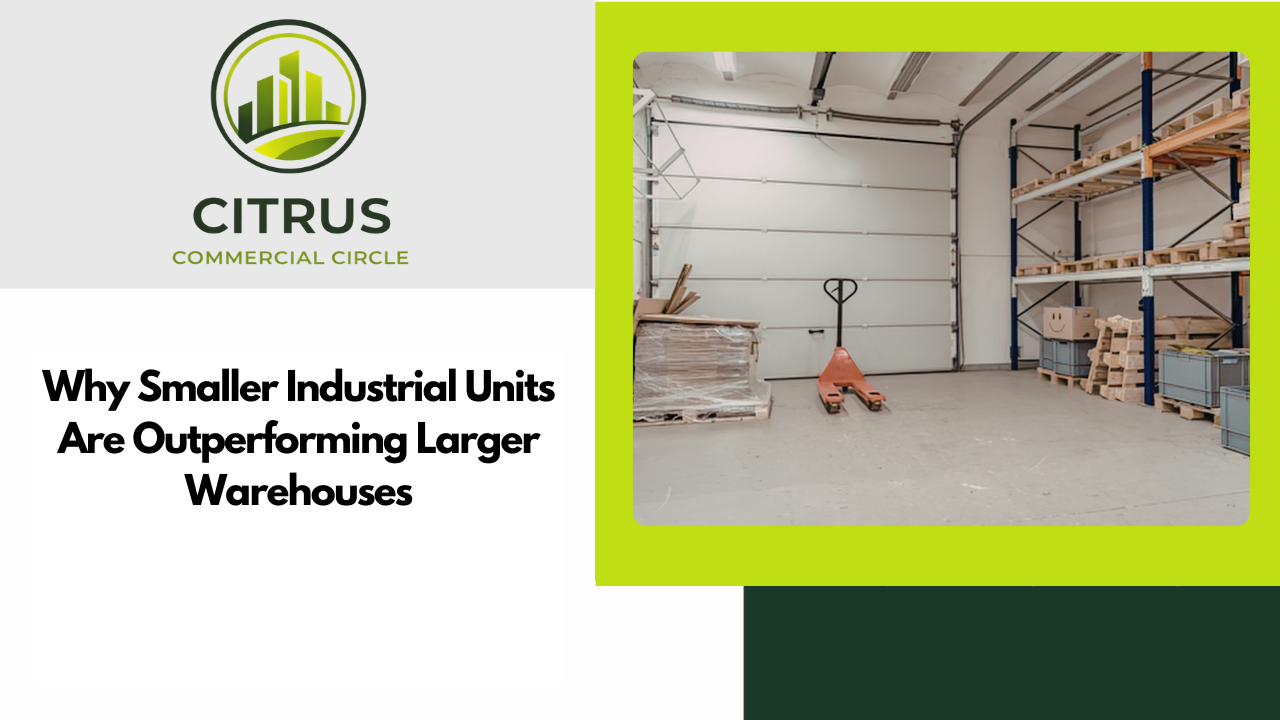
Why Smaller Industrial Units Are Outperforming Larger Warehouses
A shift in demand across the North West
In recent years, the industrial property market has seen strong growth across all sectors. However, one segment in particular continues to outperform expectations: small to mid-sized industrial units.
Across Bury, North Manchester, and the wider North West, demand for units typically ranging from around 1,000 to 5,000 sq ft remains consistently high. In contrast, larger warehouse space, while still important, often faces longer void periods and a narrower occupier pool.
At Citrus Commercial Circle, we work closely with landlords and occupiers across this sector. We are seeing clear evidence that smaller industrial units are not only more resilient but often deliver stronger overall performance.
1. The rise of SME occupiers
Small and medium-sized enterprises are the driving force behind demand for industrial space in the North West.
These businesses include:
- Trade operators
- Local manufacturers
- E-commerce sellers
- Automotive services
- Construction and maintenance firms
SMEs typically require practical, affordable units that allow them to operate efficiently without committing to large overheads. Smaller units provide exactly that.
As SME activity continues to grow, so too does demand for well-located, functional industrial space.
2. Affordability and flexibility
Smaller industrial units are naturally more affordable, both in terms of rent and operational costs. This makes them accessible to a wider range of occupiers.
Key advantages include:
- Lower monthly rent
- Reduced business rates
- Lower utility costs
- Easier financial commitment for growing businesses
For many occupiers, flexibility is essential. Smaller units allow businesses to scale up gradually, rather than overcommitting to large premises too early.
3. Wider occupier pool
Larger warehouses tend to attract a more limited range of tenants, often requiring:
- Significant turnover
- Established logistics operations
- Long-term commitments
In contrast, smaller units appeal to a much broader market. This includes start-ups, expanding SMEs, and established local businesses.
A wider occupier pool means:
- Faster letting times
- Reduced vacancy risk
- Greater competition for available units
This is one of the key reasons smaller units consistently outperform larger spaces.
4. Shorter void periods
From a landlord’s perspective, void periods are one of the biggest risks in commercial property. Smaller units significantly reduce this risk.
Because demand is high and the occupier pool is broad, vacant units are often re-let quickly. In many cases, well-presented units receive multiple enquiries shortly after becoming available.
At Citrus Commercial Circle, we regularly see smaller industrial units let within short timeframes when priced and marketed correctly.
5. Adaptability and multi-use potential
Smaller industrial units are highly versatile. They can accommodate a wide range of uses, including:
- Storage and distribution
- Workshops and production
- Trade counters
- Hybrid office-industrial use
This adaptability makes them attractive to occupiers across different sectors, further supporting demand.
Even within a single estate, units can be reconfigured or combined to suit changing requirements, providing additional flexibility for landlords.
6. Strong rental performance
Due to high demand and limited supply, smaller industrial units often achieve strong rental levels relative to their size.
This results in:
- Competitive rental growth
- Minimal incentives required
- Consistent income for landlords
In some cases, the rent per square foot for smaller units can exceed that of larger warehouses, reflecting their accessibility and demand.
7. Location advantage in secondary markets
Smaller industrial units are particularly well-suited to secondary locations such as:
- Bury
- Middleton
- Oldham
- Rochdale
These areas offer:
- Lower rents compared to city centre locations
- Strong local business communities
- Excellent road connectivity
- Proximity to residential areas and workforce
As businesses prioritise practicality and cost efficiency, these locations continue to attract strong occupier interest.
8. Lower risk for landlords and investors
Investing in smaller industrial units often provides a more balanced risk profile.
Key benefits include:
- Diversified tenant base across multiple units
- Reduced reliance on a single occupier
- Greater liquidity when selling
- More stable income streams
In contrast, larger warehouse investments can be more exposed to vacancy risk if a single tenant vacates.
9. Opportunities for value enhancement
Smaller units often offer straightforward opportunities to increase value through targeted improvements.
These may include:
- Upgrading lighting to LED
- Improving insulation
- Refurbishing office areas
- Enhancing security and access
- Improving external appearance and yard space
These relatively modest investments can significantly increase rental appeal and overall asset value.
10. The ongoing supply imbalance
One of the key drivers behind the performance of smaller industrial units is a persistent imbalance between supply and demand.
There is:
- Limited availability of well-presented small units
- Strong and growing SME demand
- Ongoing pressure on rents
This imbalance is unlikely to change in the short term, meaning smaller industrial units are expected to remain a high-performing asset class.
11. Citrus Commercial Circle’s experience
At Citrus Commercial Circle, we specialise in matching the right occupiers with the right industrial space.
Our experience includes:
- Letting small and mid-sized industrial units across the North West
- Advising landlords on pricing and presentation
- Identifying demand trends and occupier requirements
- Supporting investors in acquiring and managing industrial assets
We understand the nuances of this market and provide clear, practical advice to ensure the best outcomes for our clients.
Final thoughts
Smaller industrial units have become one of the strongest performing segments in the commercial property market. Their affordability, flexibility, and broad occupier appeal make them highly resilient and consistently in demand.
For landlords and investors, they offer stable income, reduced risk, and opportunities for growth. For occupiers, they provide practical, cost-effective space that supports business development.
At Citrus Commercial Circle, we are proud to support clients across Bury and North Manchester in navigating this dynamic and high-demand sector.
Based in Bury. Active across North Manchester. Always on your side.
Call us today: 0161 383 1806
Email: info@citruscommercialcircle.co.uk
Visit: citruscommercialcircle.co.uk
Let’s unlock the full potential together.
Citrus Commercial Circle – Where standards meet success.