

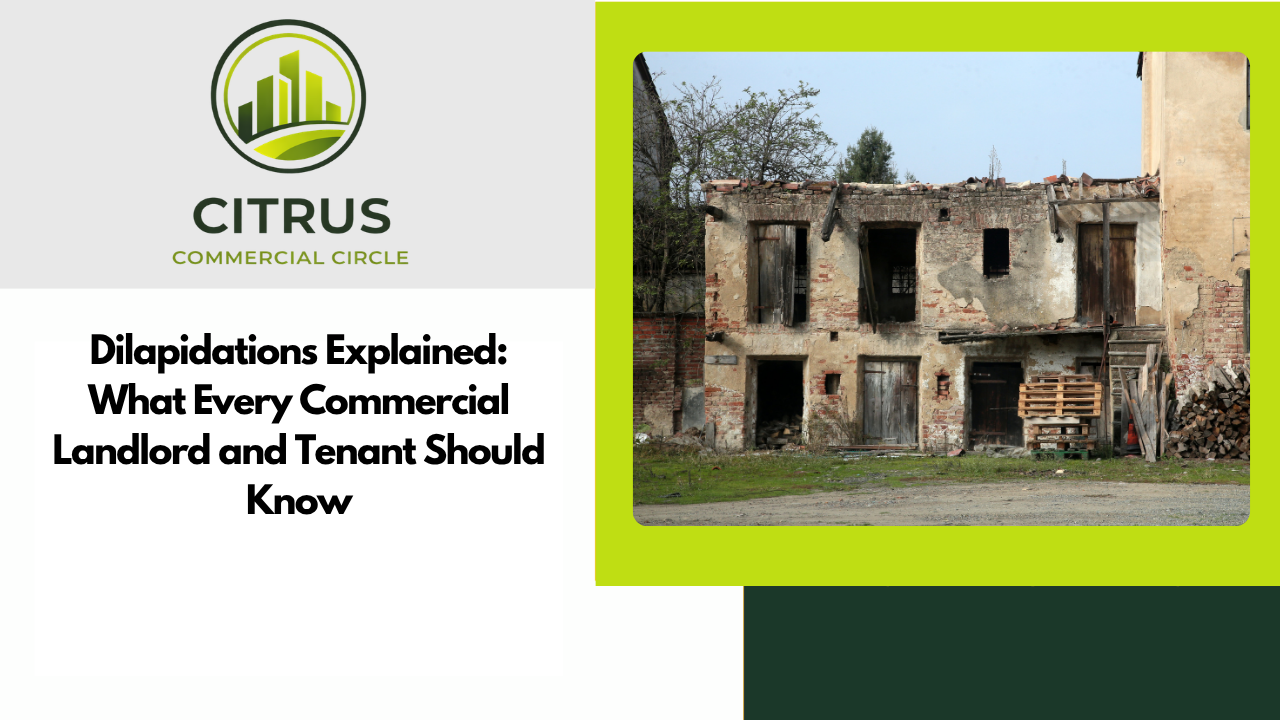
Dilapidations Explained: What Every Commercial Landlord and Tenant Should Know
One of the most misunderstood areas of commercial property
Dilapidations are a subject that many commercial landlords and tenants only think about when a lease is coming to an end.
Unfortunately, by that stage, disagreements can already have arisen, costs may be escalating and relationships between the parties can become strained.
Understanding dilapidations from the beginning of a lease—not just at the end—can help avoid unexpected liabilities and allow both landlords and tenants to plan ahead.
At Citrus Commercial Circle, we regularly advise landlords, investors and business occupiers across Bury, North Manchester and the wider North West on commercial property matters, and dilapidations are one of the most frequently misunderstood aspects of leasing.
Knowing your responsibilities early can save significant time, money and stress later.
What are dilapidations?
Dilapidations are claims made by a landlord against a tenant for breaches of the repair, reinstatement or decoration obligations contained within a commercial lease.
These claims typically arise when a tenant vacates a property.
Common examples include:
- Outstanding repairs
- Damage beyond fair wear and tear
- Failure to redecorate where required
- Unauthorised alterations
- Failure to remove tenant’s fixtures and fittings
- Failure to reinstate the premises to their original condition
The exact obligations will always depend on the wording of the lease.
Why dilapidations matter
For tenants, dilapidations can represent a significant financial liability.
For landlords, they help ensure that premises are returned in an appropriate condition so they can be re-let or sold without unnecessary delay.
Properly managed dilapidations protect the value of commercial property while ensuring both parties comply with their contractual obligations.
Every lease is different
A common misconception is that every commercial tenant must return premises in “perfect condition”.
In reality, obligations vary considerably depending upon the lease.
Important clauses often include:
- Repair obligations
- Internal decoration
- External maintenance
- Reinstatement of alterations
- Compliance with statutory requirements
Reading and understanding these clauses before signing a lease is essential.
Schedules of Condition can reduce disputes
Many modern commercial leases include a Schedule of Condition.
This document records the property’s condition at the start of the lease using photographs and written descriptions.
Its purpose is to ensure the tenant is only required to return the premises in substantially the same condition as they received them, rather than in better condition.
Schedules of Condition have become increasingly common, particularly for older industrial and commercial buildings.
Alterations should always be documented
Many tenants improve commercial premises during their occupation.
Examples include:
- Partition walls
- Air conditioning
- Security systems
- Mezzanine floors
- Kitchen facilities
- Additional offices
Before carrying out alterations, tenants should obtain any required landlord’s consent and retain copies of all approvals.
At lease expiry, some alterations may need to be removed if required by the lease.
Regular maintenance reduces future costs
One of the best ways to minimise dilapidation claims is through ongoing maintenance.
Rather than allowing issues to accumulate over several years, businesses should deal with repairs as they arise.
Examples include:
- Fixing roof leaks promptly
- Repairing damaged doors
- Maintaining flooring
- Servicing mechanical equipment
- Keeping decoration in reasonable condition
Small repairs are often considerably less expensive than major remedial works at lease expiry.
Professional surveys can provide clarity
Towards the end of a lease, many landlords appoint a chartered building surveyor to prepare a Schedule of Dilapidations.
This document identifies works that the landlord believes the tenant is responsible for under the lease.
Equally, tenants may instruct their own surveyor to review the claim and negotiate where appropriate.
Independent professional advice can often help resolve disputes more efficiently.
Dilapidations are often negotiated
Many people assume a landlord’s initial dilapidation claim is the final amount payable.
In practice, commercial settlements are frequently negotiated.
Factors influencing negotiations may include:
- The wording of the lease
- The property’s condition at the start of the tenancy
- Whether works are genuinely required
- Future redevelopment plans
- Supporting evidence
Each case depends on its own circumstances.
Good record-keeping benefits both parties
Throughout the lease, landlords and tenants should retain records including:
- Inspection reports
- Maintenance invoices
- Photographs
- Alteration approvals
- Correspondence regarding repairs
These documents can prove invaluable if questions arise at lease expiry.
Clear records often prevent unnecessary disputes.
Professional guidance is available
Dilapidations are a specialist area of commercial property.
Professional organisations such as the Royal Institution of Chartered Surveyors (RICS), the Property Litigation Association and the British Property Federation provide guidance on commercial lease obligations and property management.
Seeking advice before problems develop is usually the most cost-effective approach.
Bury and North Manchester continue to see active commercial leasing
Commercial premises across Bury and North Manchester continue to experience strong leasing activity across industrial, office and mixed-use sectors.
As businesses relocate and leases expire, understanding repair obligations has become increasingly important for both landlords and occupiers.
At Citrus Commercial Circle, we encourage clients to consider lease obligations from day one—not just when the tenancy is ending.
Citrus Commercial Circle’s market insight
At Citrus Commercial Circle, we believe that well-drafted leases and clear communication create better outcomes for everyone involved.
Whether acting for landlords, investors or occupiers, we help clients understand their obligations, minimise disputes and protect the long-term value of commercial property.
Being proactive is almost always less expensive than resolving problems after they arise.
Final thoughts
Dilapidations are an important part of commercial leasing, but they should never come as a surprise.
Understanding repair obligations, maintaining premises throughout the lease and keeping accurate records can significantly reduce the likelihood of costly disputes.
For both landlords and tenants, a clear understanding of lease responsibilities creates smoother transactions, protects investments and helps maintain positive commercial relationships.
At Citrus Commercial Circle, we are proud to support landlords, occupiers and investors across Bury and North Manchester with practical commercial property advice backed by local market knowledge.
Based in Bury. Active across North Manchester. Always on your side.
Call us today: 0161 383 1806
Email: info@citruscommercialcircle.co.uk
Visit: citruscommercialcircle.co.uk
Let’s unlock the full potential together.
Citrus Commercial Circle – Where standards meet success.