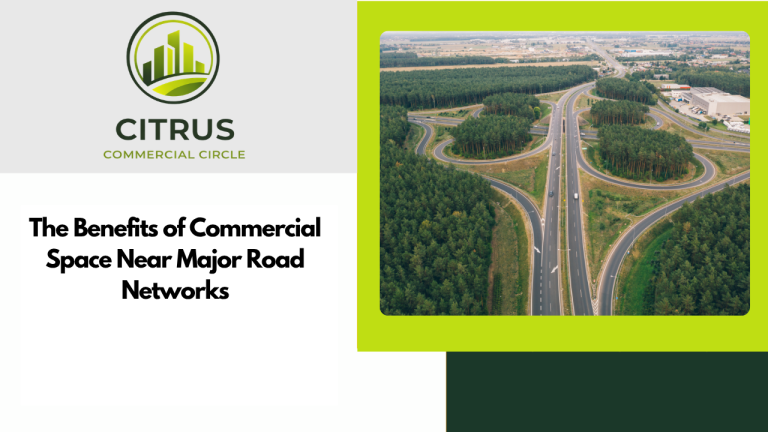


The Rise of Last-Mile Delivery and Its Impact on Industrial Property
Fast delivery is transforming commercial property demand
The way goods move across the UK has changed dramatically over the past decade. Consumer expectations around delivery speed have accelerated, with next-day and even same-day delivery becoming increasingly common.
This shift has created significant changes within the industrial property sector. Businesses involved in logistics, distribution, fulfilment, and transportation now require commercial premises that allow them to move goods quickly and efficiently to customers.
At Citrus Commercial Circle, we are seeing the effects of this trend across Bury, North Manchester, and the wider North West. Industrial units that support fast and efficient delivery networks are becoming increasingly valuable as demand for last-mile logistics continues to grow.
Understanding last-mile delivery
Last-mile delivery refers to the final stage of the delivery process.
It is the journey between a local distribution facility and the end customer.
Although it is usually the shortest part of the journey geographically, it is often the most complex and costly stage of the supply chain.
Businesses must coordinate:
- Delivery vehicles
- Routing systems
- Customer availability
- Traffic conditions
- Time-sensitive deliveries
As customer expectations continue to increase, logistics operators are investing heavily in improving last-mile performance.
Consumer expectations have changed
Modern customers expect convenience and speed.
Services such as:
- Next-day delivery
- Same-day delivery
- Scheduled delivery windows
- Real-time tracking
- Easy returns
have become increasingly common.
Businesses are under constant pressure to meet these expectations while maintaining profitability.
This has created growing demand for strategically located industrial property that allows operators to hold stock closer to customers.
The growth of specialist delivery networks
The UK logistics sector has expanded significantly to support online retail growth.
Delivery providers such as:
- Yodel
- ParcelForce Worldwide
- CitySprint
- Gophr
- Stuart Delivery
- ArrowXL
have all invested heavily in regional delivery infrastructure.
Their success depends on efficient industrial premises that support vehicle movements, parcel sorting, and rapid dispatch operations.
Industrial units are becoming increasingly important
The rise of last-mile delivery has increased demand for a wide variety of industrial property.
Businesses are seeking:
- Distribution depots
- Storage facilities
- Parcel sorting hubs
- Cross-docking facilities
- Vehicle operating centres
Industrial space that supports efficient movement of goods is becoming one of the most important components of modern supply chains.
Properties that were once viewed simply as storage facilities are now playing a critical role in customer service and business performance.
Location has become a competitive advantage
For logistics operators, location is often everything.
Industrial properties located near:
- Major motorway junctions
- Population centres
- Regional transport hubs
- Strategic road networks
can significantly reduce delivery times and operating costs.
Across Greater Manchester, commercial premises with easy access to:
- M60
- M62
- M61
- M66
- A580 East Lancashire Road
continue to attract strong interest from logistics occupiers.
Accessibility directly impacts operational efficiency.
Regional hubs are becoming more valuable
Historically, many businesses relied on large national distribution centres.
Today, many operators are supplementing these facilities with smaller regional hubs positioned closer to customers.
This approach allows businesses to:
- Reduce delivery times
- Improve customer satisfaction
- Lower transport costs
- Increase delivery capacity
As a result, industrial units in well-connected regional locations are becoming increasingly sought after.
Technology is driving logistics innovation
Modern logistics operations rely heavily on technology.
Businesses increasingly use:
- Route optimisation software
- Vehicle tracking systems
- Warehouse management systems
- Automated parcel sorting
Companies such as Descartes Systems Group, Manhattan Associates, Blue Yonder, and Infor Supply Chain Solutions continue to shape the future of logistics management.
Commercial properties that can accommodate modern operational technology are becoming increasingly attractive.
Demand for vehicle-friendly sites continues to grow
Last-mile delivery operations require properties that can support vehicle activity throughout the day.
Occupiers increasingly prioritise:
- Large loading areas
- Secure yards
- HGV access
- Van parking
- Efficient traffic flow
Industrial premises that offer these features often command strong occupier demand.
Practicality remains one of the biggest drivers of commercial property performance within the logistics sector.
E-commerce continues to influence property requirements
The growth of online shopping continues to support demand for logistics space.
Retailers operating through platforms such as:
require increasingly sophisticated fulfilment and delivery networks.
Many growing businesses eventually require commercial premises that allow them to manage stock, fulfil orders, and support customer delivery expectations.
This trend continues to drive industrial property demand.
Investors are responding to changing demand
Commercial property investors are increasingly targeting logistics and industrial assets due to their strong market fundamentals.
Benefits often include:
- Consistent occupier demand
- Lower vacancy levels
- Long-term growth potential
- Broad tenant appeal
The growth of last-mile delivery has strengthened the investment case for industrial property across many regional markets.
This trend is expected to continue as consumer expectations evolve further.
Bury and North Manchester remain well positioned
The North West continues to benefit from strong logistics demand thanks to its strategic location and excellent transport infrastructure.
Businesses operating within Bury and North Manchester benefit from:
- Access to major motorway networks
- Strong regional connectivity
- Competitive occupational costs
- Proximity to large population centres
These advantages make the area particularly attractive to logistics operators seeking efficient last-mile delivery locations.
At Citrus Commercial Circle, we continue to see increasing demand for industrial premises that support modern logistics operations.
Citrus Commercial Circle’s market insight
At Citrus Commercial Circle, we understand how logistics trends are influencing commercial property demand.
Our local expertise allows us to:
- Identify strategically located industrial opportunities
- Understand evolving occupier requirements
- Advise investors on market trends
- Support landlords in positioning industrial assets effectively
As delivery networks continue to expand, industrial property will remain one of the most important sectors within the commercial property market.
Final thoughts
The rise of last-mile delivery is fundamentally reshaping industrial property demand across the UK.
As businesses invest in faster fulfilment, regional distribution hubs, and local delivery infrastructure, demand for well-located industrial space continues to grow.
From vehicle access and storage facilities to transport connectivity and operational efficiency, industrial property is playing an increasingly important role in modern commerce.
At Citrus Commercial Circle, we are proud to help landlords, occupiers, and investors across Bury and North Manchester identify opportunities within this rapidly evolving sector.
Based in Bury. Active across North Manchester. Always on your side.
Call us today: 0161 383 1806
Email: info@citruscommercialcircle.co.uk
Visit: citruscommercialcircle.co.uk
Let’s unlock the full potential together.
Citrus Commercial Circle – Where standards meet success.