
The Role of Loading Access in Commercial Property Performance
Efficient access drives efficient business operations
When occupiers search for commercial property, attention often focuses on headline metrics such as rent, size, and location. While these factors remain extremely important, operational efficiency is often determined by something far more practical: loading access.
For many businesses, the ability to move goods, stock, materials, equipment, and vehicles efficiently can have a direct impact on productivity, labour costs, customer service, and overall profitability.
This makes loading access one of the most important practical features in modern commercial property.
At Citrus Commercial Circle, we regularly see occupiers across Bury, North Manchester, and the wider North West prioritise strong loading access when evaluating industrial units, warehouses, trade counters, and logistics premises.
In many sectors, poor loading arrangements can quickly become a major operational bottleneck.
What is loading access?
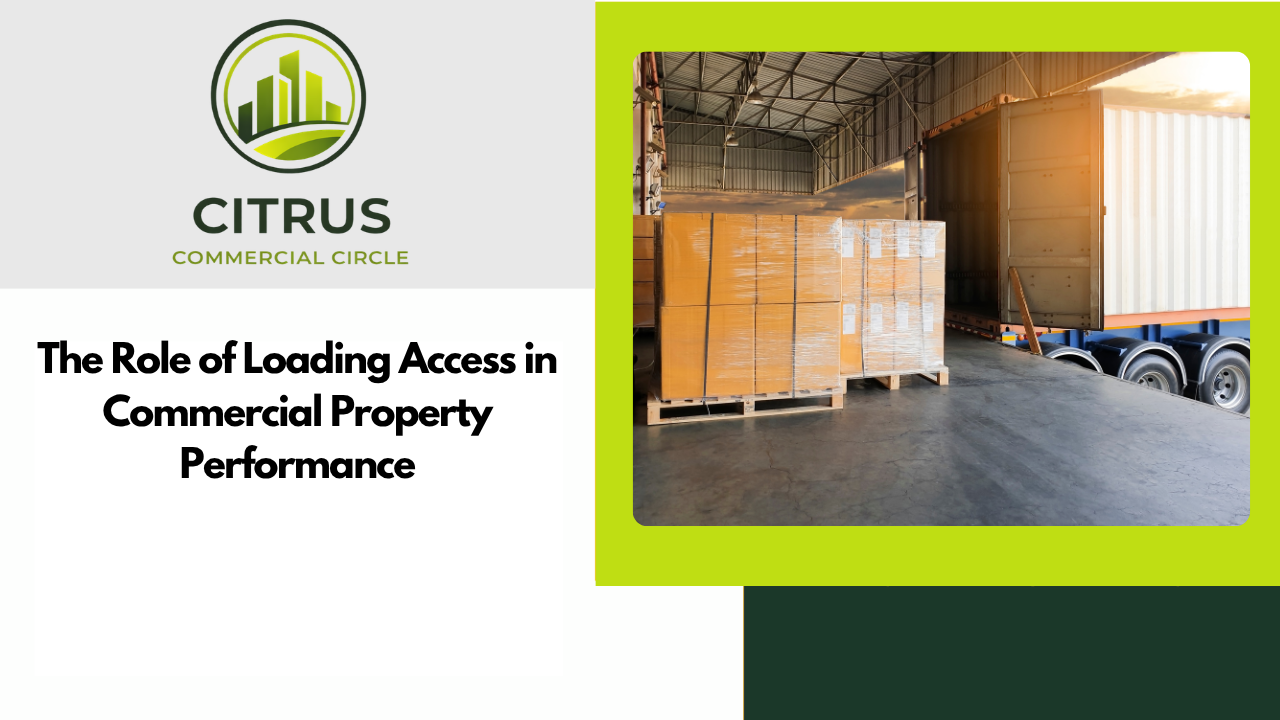
Loading access refers to how easily vehicles, deliveries, and goods can enter, unload, load, and exit a commercial property.
This may involve:
- Roller shutter access
- Loading bays
- Yard space
- HGV circulation
- Turning areas
- Dock levellers
- Delivery routes
The quality of loading access affects how efficiently a business can operate on a daily basis.
Good access reduces delays and improves workflow.
Loading efficiency affects daily productivity
Every delivery, collection, or stock movement consumes time.
Poor loading arrangements can cause:
- Delays
- Congestion
- Manual handling inefficiencies
- Increased labour costs
- Operational frustration
Strong loading access improves:
- Delivery speed
- Staff efficiency
- Vehicle turnaround
- Safety
- Workflow
Small operational improvements can create significant long-term productivity gains.
Warehousing depends heavily on loading access
Warehouse occupiers place enormous importance on loading capability.
These businesses often handle:
- Pallets
- Bulk stock
- Deliveries
- Dispatch operations
- Returns
Logistics operators such as DHL Supply Chain, GXO Logistics, Wincanton and Kuehne+Nagel rely heavily on properties that support fast and efficient vehicle movement.
Loading inefficiency directly impacts throughput.
This makes access a major operational priority.
Trade counters require fast vehicle movement
Trade occupiers also depend heavily on practical loading arrangements.
Examples include:
- Builders merchants
- Plumbing suppliers
- Electrical wholesalers
- Flooring businesses
- Kitchen suppliers
These businesses frequently handle bulky materials such as:
- Timber
- Appliances
- Pipework
- Panels
- Pallets
Companies such as Howdens, Screwfix, Toolstation and Travis Perkins all operate within sectors where efficient loading is essential.
Access influences customer experience as well as operations.
Yard space adds major value
Properties with dedicated yard space often perform strongly because they improve loading flexibility.
Yards can provide:
- Vehicle waiting space
- HGV manoeuvring
- Temporary storage
- Loading overflow
- Safer circulation
Good yard design reduces congestion and improves workflow.
Properties with both internal space and practical external loading areas often attract premium demand.
At Citrus Commercial Circle, yard space remains one of the strongest demand drivers.
HGV accessibility matters
For larger industrial and logistics occupiers, HGV access can be critical.
Important considerations include:
- Entrance width
- Turning circles
- Road access
- Yard depth
- Height restrictions
A property may look suitable on paper but fail operationally if HGV access is restricted.
This can significantly limit occupier appeal.
Vehicle practicality matters.
E-commerce increases delivery frequency
The rise of e-commerce has increased delivery volumes across commercial property.
Online retailers now manage frequent:
- Courier collections
- Parcel deliveries
- Returns
- Inventory replenishment
Platforms such as Amazon UK, Shopify, eBay UK and TikTok Shop UK continue driving fulfilment demand.
This makes efficient loading infrastructure increasingly valuable.
Loading access affects labour efficiency
Poor loading arrangements often increase staffing requirements.
When loading is inefficient, businesses may need additional labour for:
- Manual handling
- Goods transfers
- Traffic coordination
- Delayed unloading
Improved access reduces unnecessary labour costs.
Operational design directly affects profitability.
This is why loading should never be treated as a minor detail.
Safety improves with better access
Loading areas are high-risk operational environments.
Poor layouts can increase risks such as:
- Vehicle collisions
- Trip hazards
- Manual handling injuries
- Congestion
Good loading design improves safety through:
- Clear circulation
- Better visibility
- Reduced conflict zones
- Safer unloading
Health and safety performance matters to occupiers and landlords alike.
Investors recognise practical value
Commercial investors increasingly recognise the importance of loading access.
Properties with strong loading arrangements often benefit from:
- Wider tenant appeal
- Stronger demand
- Lower vacancy risk
- Better rental performance
Practical features often drive long-term asset resilience.
Loading access remains one of the most important industrial value drivers.
Modern developments prioritise loading infrastructure
Developers increasingly design industrial assets around loading efficiency.
Modern schemes often include:
- Larger loading bays
- Electric shutters
- Better yard depth
- Dedicated HGV routes
- Improved circulation
Developers such as SEGRO, Prologis, Panattoni UK and Tritax continue focusing heavily on operational functionality.
Loading access remains central to industrial design.
Bury and North Manchester remain strong logistics markets
Commercial occupiers across Bury and North Manchester increasingly seek premises offering:
- Practical loading
- Good yard space
- Strong road access
- Vehicle-friendly layouts
Demand remains particularly strong among logistics, trade, storage, and industrial occupiers.
At Citrus Commercial Circle, loading access remains one of the most common operational requirements we hear during property searches.
Citrus Commercial Circle’s market insight
At Citrus Commercial Circle, we understand how practical operational requirements influence commercial property performance.
Our experience allows us to:
- Identify high-demand operational assets
- Assess loading suitability
- Advise investors on value drivers
- Support landlords in improving property appeal
Loading access remains one of the most important yet underrated factors in commercial property.
Final thoughts
Loading access plays a critical role in commercial property performance because it directly influences efficiency, safety, labour costs, vehicle movement, and operational scalability.
For occupiers across logistics, warehousing, trade, storage, and industrial sectors, strong loading infrastructure can significantly improve business performance.
As businesses continue prioritising efficiency and operational flexibility, properties with excellent loading access are likely to remain among the most desirable commercial assets in the market.
At Citrus Commercial Circle, we are proud to help occupiers, landlords, and investors across Bury and North Manchester identify commercial property opportunities designed for strong operational performance and long-term value.
Based in Bury. Active across North Manchester. Always on your side.
Call us today: 0161 383 1806
Email: info@citruscommercialcircle.co.uk
Visit: citruscommercialcircle.co.uk
Let’s unlock the full potential together.
Citrus Commercial Circle – Where standards meet success.