
Why Commercial Properties with Multiple Access Points Attract Stronger Demand
Access flexibility is becoming a major commercial advantage
When businesses evaluate commercial property, they naturally focus on location, size, rent and specification. However, one feature is increasingly influencing occupier decisions across multiple sectors: the number and type of access points available to the property.
Commercial properties offering separate customer entrances, delivery access, staff entrances and independent vehicle routes often provide significantly greater operational flexibility than properties relying on a single entrance.
At Citrus Commercial Circle, we regularly see occupiers across Bury, North Manchester and the wider North West place substantial value on commercial properties that provide multiple access options.
For many businesses, operational flow starts at the door.
What are multiple access points?
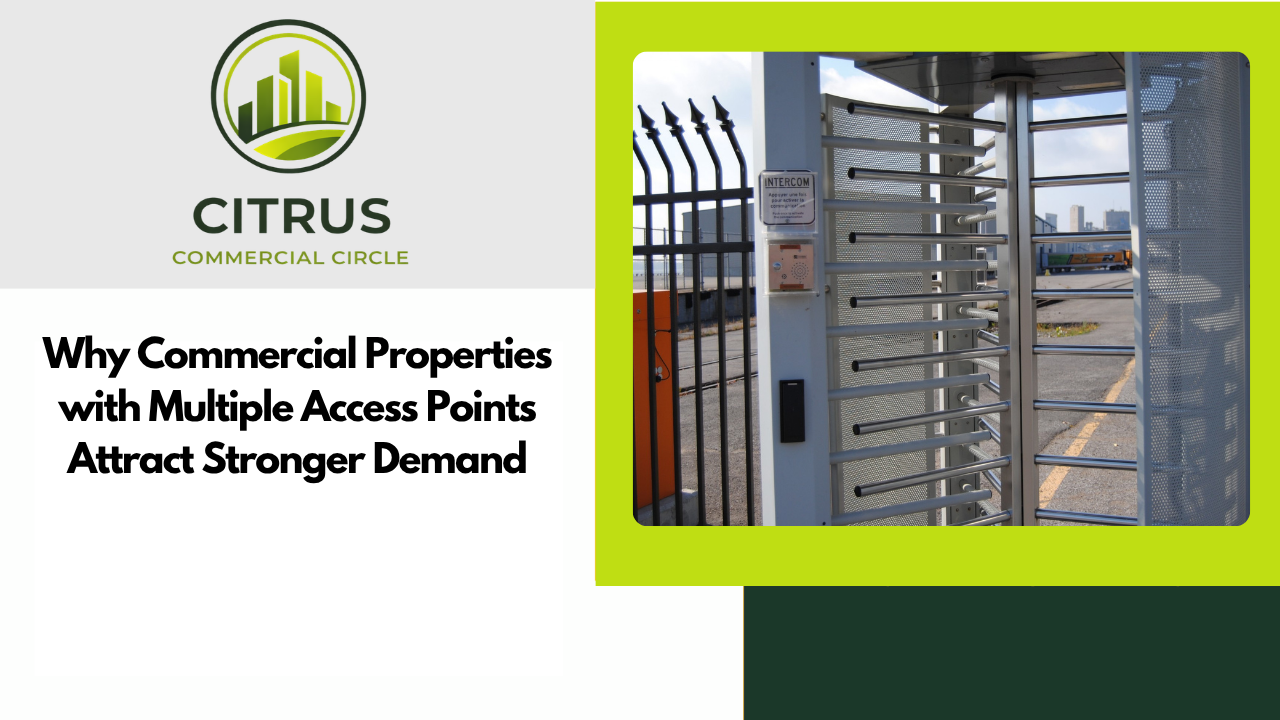
Multiple access points refer to a commercial property having more than one means of entering or exiting the premises.
Examples include:
- Separate customer entrances
- Dedicated delivery doors
- Independent staff entrances
- Multiple roller shutters
- Separate vehicle access routes
- Secondary emergency exits
The ability to separate different types of traffic can significantly improve operational efficiency.
Customer and operational traffic can be separated
One of the biggest advantages of multiple access points is the ability to separate customers from operational activities.
This may allow businesses to create:
- Dedicated customer entrances
- Independent delivery areas
- Separate collection points
- Distinct staff access routes
This separation often improves both customer experience and operational efficiency.
The two activities no longer compete for the same space.
Deliveries become easier to manage
Many businesses receive regular deliveries throughout the working day.
If all traffic is forced through a single entrance, problems can quickly arise such as:
- Congestion
- Delays
- Health and safety risks
- Customer disruption
Dedicated delivery access helps businesses maintain smooth operations while continuing to serve customers.
Operational efficiency improves immediately.
Trade counters particularly benefit
Trade businesses are among the strongest users of separate access arrangements.
Examples include:
- Builders merchants
- Electrical wholesalers
- Plumbing suppliers
- Kitchen retailers
- Flooring businesses
These businesses often benefit from having:
- Customer entrances
- Trade collection points
- Delivery loading areas
The ability to separate these functions improves both speed and safety.
Industrial occupiers value operational flow
Industrial occupiers frequently require multiple access arrangements for practical reasons.
Benefits may include:
- Separate goods-in areas
- Independent dispatch routes
- Vehicle segregation
- Staff entrances
This improves:
- Workflow
- Vehicle circulation
- Productivity
- Safety performance
Efficient movement often creates measurable operational advantages.
Staff entrances improve workplace management
Separate staff entrances can provide several practical benefits.
Examples include:
- Improved security
- Better time management
- Reduced customer disruption
- Easier access control
For larger occupiers, dedicated staff access often becomes an important operational requirement.
The employee experience can improve as a result.
Customer experience improves
For customer-facing businesses, dedicated customer entrances often create a more professional experience.
Benefits may include:
- Easier navigation
- Reduced waiting times
- Improved presentation
- Better accessibility
Customers increasingly expect convenience and simplicity.
Commercial property should support these expectations.
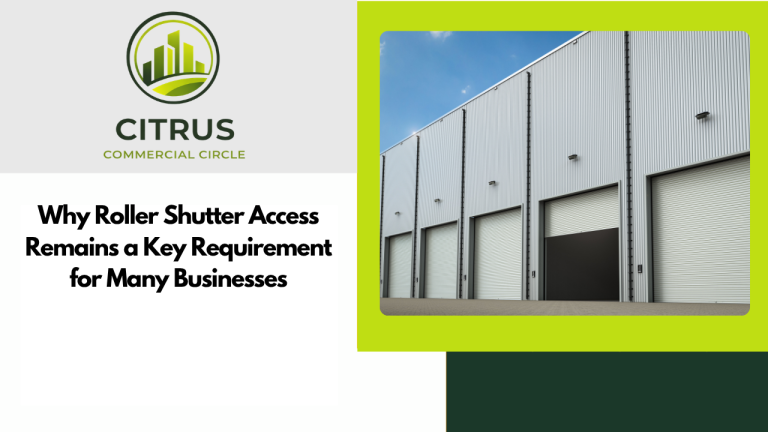
Multiple roller shutters increase flexibility
Industrial occupiers frequently value properties offering more than one roller shutter.
This can allow businesses to operate:
- Separate loading areas
- Goods-in operations
- Dispatch functions
- Customer collections
Operational flexibility often increases significantly.
This can improve both productivity and future scalability.
Safety benefits should not be overlooked
Separating different movements within a commercial property often improves safety.
Examples include reducing interaction between:
- Forklifts and pedestrians
- Customers and deliveries
- Staff and heavy vehicles
Good design supports safer operations.
Health and safety improvements can create substantial value over time.
Future growth becomes easier
Businesses evolve over time.
Properties with multiple access points often adapt more easily to:
- Increased staffing
- Additional vehicles
- Higher delivery volumes
- New operational requirements
Flexibility supports growth.
Properties that can evolve alongside businesses often attract stronger long-term demand.
Investors recognise operational value
Commercial investors increasingly understand that operational functionality influences tenant demand.
Properties with multiple access arrangements often benefit from:
- Broader occupier appeal
- Lower vacancy risk
- Better tenant retention
- Stronger rental performance
Practical design often protects long-term value.
Refurbishment opportunities exist
Many older commercial buildings can improve functionality through relatively simple changes.
Examples include:
- Creating additional entrances
- Installing extra roller shutters
- Improving circulation routes
- Reconfiguring access layouts
These changes can significantly improve occupier appeal.
Operational improvements often generate strong returns.
Bury and North Manchester occupiers continue prioritising flexibility
Commercial occupiers across Bury and North Manchester increasingly seek buildings that support efficient operations.
Businesses regularly enquire about:
- Loading arrangements
- Customer access
- Staff circulation
- Vehicle movement
At Citrus Commercial Circle, multiple access points are becoming an increasingly common requirement during commercial property searches.
The market continues moving towards operational efficiency.
Citrus Commercial Circle’s market insight
At Citrus Commercial Circle, we understand how practical building design influences commercial performance.
Our experience allows us to:
- Assess operational suitability
- Identify high-demand assets
- Advise investors on value drivers
- Support landlords in improving asset appeal
Multiple access points remain one of the most underrated features in commercial property.
Final thoughts
Commercial properties with multiple access points attract stronger demand because they improve efficiency, safety, customer experience and future flexibility.
As businesses continue prioritising operational performance, buildings that support smooth movement of people, vehicles and goods are likely to remain highly desirable.
Commercial success often begins with practical design.
At Citrus Commercial Circle, we are proud to help occupiers, landlords and investors across Bury and North Manchester identify commercial property opportunities that combine functionality, flexibility and long-term value.
Based in Bury. Active across North Manchester. Always on your side.
Call us today: 0161 383 1806
Email: info@citruscommercialcircle.co.uk
Visit: citruscommercialcircle.co.uk
Let’s unlock the full potential together.
Citrus Commercial Circle – Where standards meet success.