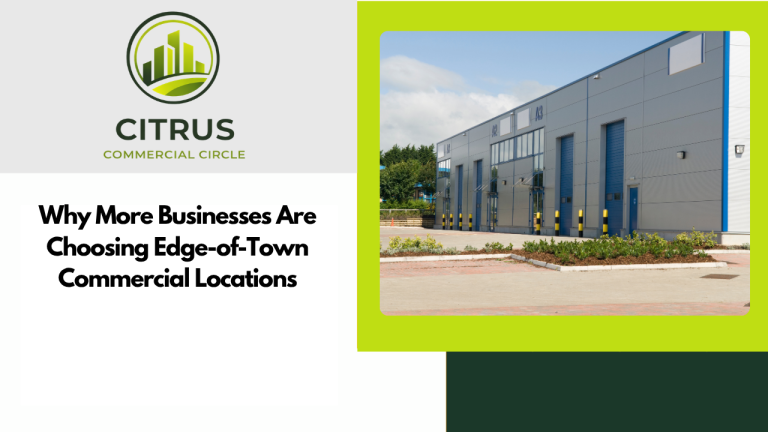


The Growing Demand for Small Industrial Units Under 2,000 Sq Ft
Small industrial units are becoming increasingly difficult to secure
Across the UK commercial property market, one of the strongest areas of occupier demand is no longer large warehouses or major logistics hubs alone. Increasingly, it is small industrial units — particularly those under 2,000 square feet — that are generating the highest levels of enquiry.
From start-ups and trade businesses to e-commerce operators and growing SMEs, small industrial accommodation has become one of the most competitive sectors within commercial property.
At Citrus Commercial Circle, units under 2,000 sq ft consistently attract strong interest across Bury, North Manchester, and the wider North West. In many cases, suitable properties receive multiple enquiries within a short period of being marketed.
What counts as a small industrial unit?
Small industrial units typically include commercial premises ranging from approximately:
- 200 sq ft
- 500 sq ft
- 1,000 sq ft
- 1,500 sq ft
- Up to 2,000 sq ft
These units may be used for:
- Storage
- Workshops
- Trade counters
- Light manufacturing
- Distribution
- Hybrid office and warehouse operations
Their size makes them accessible to a broad range of businesses.
This wide occupier appeal is one of the main reasons demand remains so strong.
SMEs are driving demand
Small and medium-sized enterprises are the backbone of the UK economy.
These businesses often require practical premises that offer:
- Affordable rent
- Operational flexibility
- Room for growth
- Good accessibility
Many SMEs are at a stage where home working or garage-based operations are no longer sufficient, yet larger industrial units remain financially unnecessary.
Small industrial units offer the ideal middle ground.
Start-ups increasingly need operational space
Many start-ups begin with minimal overheads, often operating from home.
As businesses grow, they commonly require space for:
- Stock
- Equipment
- Packing
- Production
- Deliveries
Small industrial units provide an affordable route into commercial occupation.
This allows businesses to scale while maintaining cost control.
At Citrus Commercial Circle, we regularly work with first-time occupiers making this transition.
E-commerce continues driving demand
Online retail has created major demand for smaller industrial accommodation.
E-commerce businesses frequently need space for:
- Inventory storage
- Order fulfilment
- Packaging
- Dispatch operations
- Returns handling
Businesses selling through platforms such as Shopify, Etsy UK, TikTok Shop UK, WooCommerce and BigCommerce increasingly require small industrial space to support growing order volumes.
This trend continues to strengthen occupier demand.
Trade businesses rely heavily on smaller units
Trade occupiers remain among the strongest users of small industrial accommodation.
Common occupiers include:
- Electricians
- Plumbers
- Joiners
- Decorators
- Builders
- Flooring contractors
These businesses typically need space for:
- Tools
- Materials
- Vans
- Storage
- Administration
Smaller industrial units often provide exactly what these occupiers need.
Affordability makes smaller units attractive
Affordability remains one of the biggest advantages of small industrial units.
Compared with larger premises, smaller units usually offer:
- Lower rent
- Lower utility costs
- Reduced business rates exposure
- Lower fit-out costs
This makes them attractive to growing businesses seeking manageable overheads.
Cost control remains critical for SMEs and start-ups.
Flexibility increases occupier appeal
Small industrial units are highly versatile.
They can often support multiple uses, including:
- Warehouse storage
- Workshop operations
- Office integration
- Customer collections
- Light production
This flexibility broadens occupier demand.
Properties that can accommodate hybrid uses often attract the strongest interest.
Supply remains limited
One major reason demand is so intense is the lack of available stock.
Several factors contribute to this shortage:
- Limited new development
- Conversion to alternative uses
- Rising construction costs
- High occupancy levels
Developers often prioritise larger industrial schemes because these can generate higher overall returns.
This leaves a shortage of smaller units within many markets.
Existing stock rarely stays vacant for long
Due to strong demand, well-positioned small industrial units often let quickly.
Key features that attract occupiers include:
- Roller shutter access
- Parking
- Loading facilities
- Secure estates
- Good road links
Properties offering these features rarely remain vacant for extended periods.
At Citrus Commercial Circle, smaller industrial stock remains among the fastest-moving property types we handle.
Industrial estates remain popular
Small industrial units within established business parks and industrial estates are particularly desirable.
These locations often provide:
- Security
- Parking
- Shared infrastructure
- Easy access
- Professional surroundings
Occupiers value both practicality and convenience.
Well-managed estates continue attracting strong enquiry levels.
Investors increasingly favour smaller industrial assets
Small industrial units are attracting growing investor interest.
Benefits may include:
- Strong occupier demand
- Broad tenant appeal
- Low vacancy risk
- Attractive yields
Unlike highly specialised commercial assets, smaller industrial units appeal to a wide variety of occupiers.
This diversity improves resilience.
Investors increasingly recognise the strength of this asset type.
Mixed-use occupiers are increasing
Modern occupiers increasingly require premises that combine:
- Storage
- Office space
- Dispatch
- Customer interaction
Small industrial units often accommodate these mixed-use requirements effectively.
This has expanded the range of occupiers competing for smaller units.
Traditional boundaries between office and industrial space continue to blur.
Bury and North Manchester remain strong markets
Demand for small industrial units remains especially strong across:
- Bury
- Rochdale
- Oldham
- Bolton
- Salford
- North Manchester
The region benefits from:
- Strong transport links
- Established industrial estates
- Competitive rents
- Diverse occupier demand
These factors continue driving strong enquiry levels.
At Citrus Commercial Circle, units under 2,000 sq ft consistently represent one of the most active sectors within our portfolio.
Citrus Commercial Circle’s market insight
At Citrus Commercial Circle, we understand why smaller industrial units continue outperforming many other commercial sectors.
Our experience allows us to:
- Identify high-demand opportunities
- Understand occupier requirements
- Advise investors on market trends
- Support landlords in maximising asset performance
Small industrial units remain one of the strongest-performing sectors in today’s market.
Final thoughts
Small industrial units under 2,000 sq ft have become increasingly sought after because they offer affordability, flexibility, and practical operational space for a wide range of businesses.
From start-ups and SMEs to e-commerce businesses and trade operators, demand continues to grow while supply remains limited.
As business models continue evolving and operational flexibility becomes increasingly important, small industrial units are likely to remain among the most competitive commercial property sectors in the UK.
At Citrus Commercial Circle, we are proud to help occupiers, landlords, and investors across Bury and North Manchester identify small industrial opportunities that support long-term business success.
Based in Bury. Active across North Manchester. Always on your side.
Call us today: 0161 383 1806
Email: info@citruscommercialcircle.co.uk
Visit: citruscommercialcircle.co.uk
Let’s unlock the full potential together.
Citrus Commercial Circle – Where standards meet success.