

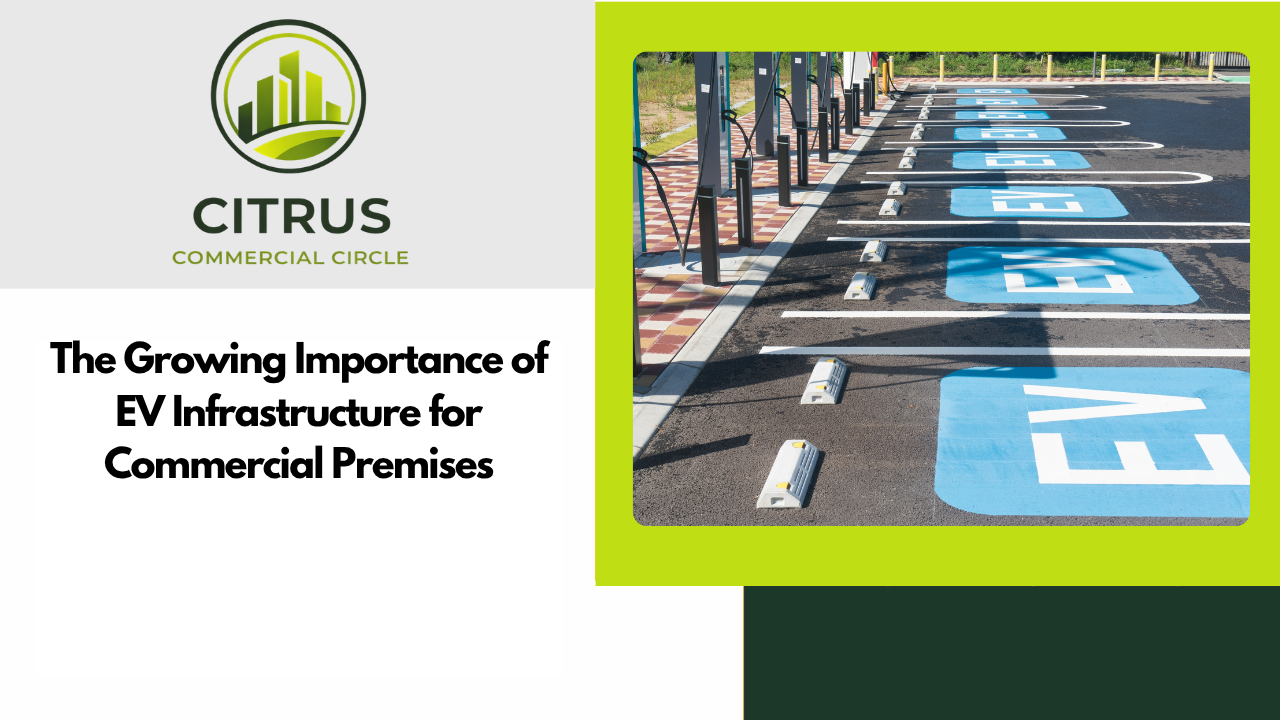
The Growing Importance of EV Infrastructure for Commercial Premises
Electric vehicles are changing the commercial property landscape
The transition towards electric vehicles (EVs) is no longer a future trend — it is happening now.
Across the UK, businesses are increasingly adopting electric cars, vans, and fleet vehicles as part of wider sustainability strategies and operational planning. As a result, commercial occupiers are placing greater emphasis on properties that can support EV charging infrastructure.
What was once viewed as a desirable extra is rapidly becoming an expected feature of modern commercial premises.
At Citrus Commercial Circle, we are seeing growing interest from occupiers, investors, and landlords who recognise that EV infrastructure will play an increasingly important role in commercial property over the coming years.
Business vehicle fleets are evolving
Many businesses are actively transitioning their fleets towards electric vehicles.
This includes:
- Sales teams
- Service engineers
- Delivery operators
- Maintenance contractors
- Management vehicles
Manufacturers such as Ford Pro UK, Mercedes-Benz Vans UK, Renault Pro+ UK, Volkswagen Commercial Vehicles and Maxus UK continue expanding their electric vehicle ranges to meet increasing demand.
As businesses adopt EV fleets, access to charging facilities becomes an essential consideration when selecting commercial premises.
Occupiers are asking different questions
Historically, commercial occupiers focused on factors such as:
- Rent
- Size
- Parking
- Location
- Access
Today, businesses increasingly ask additional questions:
- Is EV charging available?
- Can chargers be installed?
- Is sufficient electrical capacity available?
- Can future charging requirements be accommodated?
These considerations are becoming increasingly important during property searches.
Employee expectations are changing
The rise in electric vehicle ownership is not limited to businesses.
Employees are increasingly purchasing EVs for personal use and may expect charging facilities at work.
Providing workplace charging can offer several benefits:
- Improved employee convenience
- Enhanced staff satisfaction
- Recruitment advantages
- Sustainability credentials
As electric vehicle adoption continues increasing, workplace charging is likely to become a more common occupier requirement.
Sustainability targets are influencing decisions
Many businesses have established environmental targets designed to reduce carbon emissions and improve sustainability performance.
Commercial property plays a significant role in helping organisations achieve these objectives.
Charging infrastructure can support:
- Fleet electrification
- Sustainable transport initiatives
- Environmental reporting requirements
- Corporate responsibility goals
Businesses increasingly view EV charging as part of a broader sustainability strategy rather than simply a vehicle-related feature.
Landlords are beginning to future-proof assets
Forward-thinking landlords are increasingly investing in EV infrastructure.
Benefits may include:
- Improved property attractiveness
- Increased occupier appeal
- Enhanced long-term competitiveness
- Future-proofing commercial assets
As occupier expectations evolve, commercial properties that support modern transport requirements are likely to remain more attractive within the market.
Specialist charging providers are expanding rapidly
The UK’s EV charging network continues to grow.
Providers such as:
continue investing heavily in charging infrastructure throughout the UK.
The rapid expansion of these networks highlights the growing importance of EV charging within both residential and commercial environments.
Commercial estates are adapting
Business parks and industrial estates are increasingly exploring EV charging solutions.
This may involve:
- Shared charging facilities
- Dedicated tenant chargers
- Visitor charging points
- Fleet charging infrastructure
Commercial estates that successfully adapt to changing occupier requirements may gain a competitive advantage over less flexible locations.
Industrial occupiers are becoming major users
Industrial and logistics businesses are expected to play a significant role in EV adoption.
Fleet operators increasingly utilise:
- Electric vans
- Electric service vehicles
- Electric maintenance fleets
Businesses operating from industrial premises often require charging facilities capable of supporting multiple vehicles simultaneously.
This creates additional demand for properties with suitable electrical infrastructure.
Electrical capacity is becoming more important
One challenge associated with EV charging is power availability.
Commercial occupiers increasingly need to consider:
- Existing electrical supply
- Future capacity requirements
- Upgrade costs
- Infrastructure compatibility
Properties with strong utility infrastructure may become increasingly attractive as EV adoption accelerates.
This factor is likely to influence future property decisions.
Customer expectations are also evolving
Businesses that welcome visitors may benefit from providing charging facilities.
Potential advantages include:
- Increased customer convenience
- Longer dwell times
- Improved visitor experience
- Enhanced sustainability credentials
As public awareness of electric vehicles grows, charging availability may become an increasingly important factor for some customers.
Investors are taking notice
Commercial property investors are beginning to recognise the long-term importance of EV infrastructure.
Assets capable of supporting:
- Fleet charging
- Workplace charging
- Visitor charging
may become more attractive as market expectations evolve.
Future-proofing commercial property is becoming an increasingly important part of investment strategy.
Greater Manchester is embracing EV growth
The North West continues investing in electric vehicle infrastructure.
Businesses throughout Bury and North Manchester are increasingly adopting EVs as charging networks improve and vehicle ranges expand.
Commercial properties that support this transition are likely to benefit from growing occupier demand.
At Citrus Commercial Circle, we are seeing increasing awareness of EV infrastructure among both landlords and occupiers.
Citrus Commercial Circle’s market insight
At Citrus Commercial Circle, we understand how changing technology and sustainability trends influence commercial property demand.
Our experience allows us to:
- Identify future market trends
- Understand occupier requirements
- Advise landlords on asset positioning
- Support investors seeking long-term resilience
EV infrastructure is becoming an increasingly important consideration within the commercial property sector.
Final thoughts
Electric vehicle adoption is changing the way businesses evaluate commercial property.
As occupiers transition fleets, employees adopt EVs, and sustainability objectives become more important, charging infrastructure is likely to become a standard expectation rather than a luxury feature.
Commercial properties that adapt early may be better positioned to attract occupiers and remain competitive within an evolving marketplace.
At Citrus Commercial Circle, we are proud to help occupiers, landlords, and investors across Bury and North Manchester understand emerging trends and identify commercial property opportunities that support long-term success.
Based in Bury. Active across North Manchester. Always on your side.
Call us today: 0161 383 1806
Email: info@citruscommercialcircle.co.uk
Visit: citruscommercialcircle.co.uk
Let’s unlock the full potential together.
Citrus Commercial Circle – Where standards meet success.