
How Vehicle-Based Businesses Are Driving Demand for Commercial Space
Vehicle-related businesses remain a major force in the commercial market
Vehicle-based businesses have long played an important role within the UK economy, but their influence on commercial property demand has become increasingly significant in recent years.
From car dealerships and mechanics to transport operators, recovery firms, valeting businesses, MOT centres, and fleet operators, vehicle-related businesses continue to generate strong demand for a wide range of commercial property.
At Citrus Commercial Circle, we regularly receive enquiries from occupiers whose businesses depend heavily on vehicles. Across Bury, North Manchester, and the wider North West, vehicle-based operators remain one of the most active sources of demand for yards, industrial units, forecourts, workshops, and mixed-use commercial space.
What are vehicle-based businesses?
Vehicle-based businesses are companies whose operations depend heavily on cars, vans, HGVs, plant vehicles, or transport fleets.
Examples include:
- Car sales businesses
- MOT centres
- Vehicle repair garages
- Valeting operators
- Recovery companies
- Transport businesses
- Fleet management companies
- Vehicle rental firms
- Delivery operators
- Specialist automotive services
These businesses often require highly practical commercial premises.
Their operational needs are helping shape property demand across multiple sectors.
Vehicle businesses require specialised space
Unlike many traditional occupiers, vehicle-based businesses often need commercial premises with specific operational features.
Common requirements include:
- Secure yards
- Forecourt space
- Workshop areas
- Roller shutter access
- Vehicle circulation
- Parking capacity
- Strong road access
Not every commercial property can meet these needs.
This naturally limits supply and increases competition for suitable sites.
Car sales businesses continue seeking forecourts
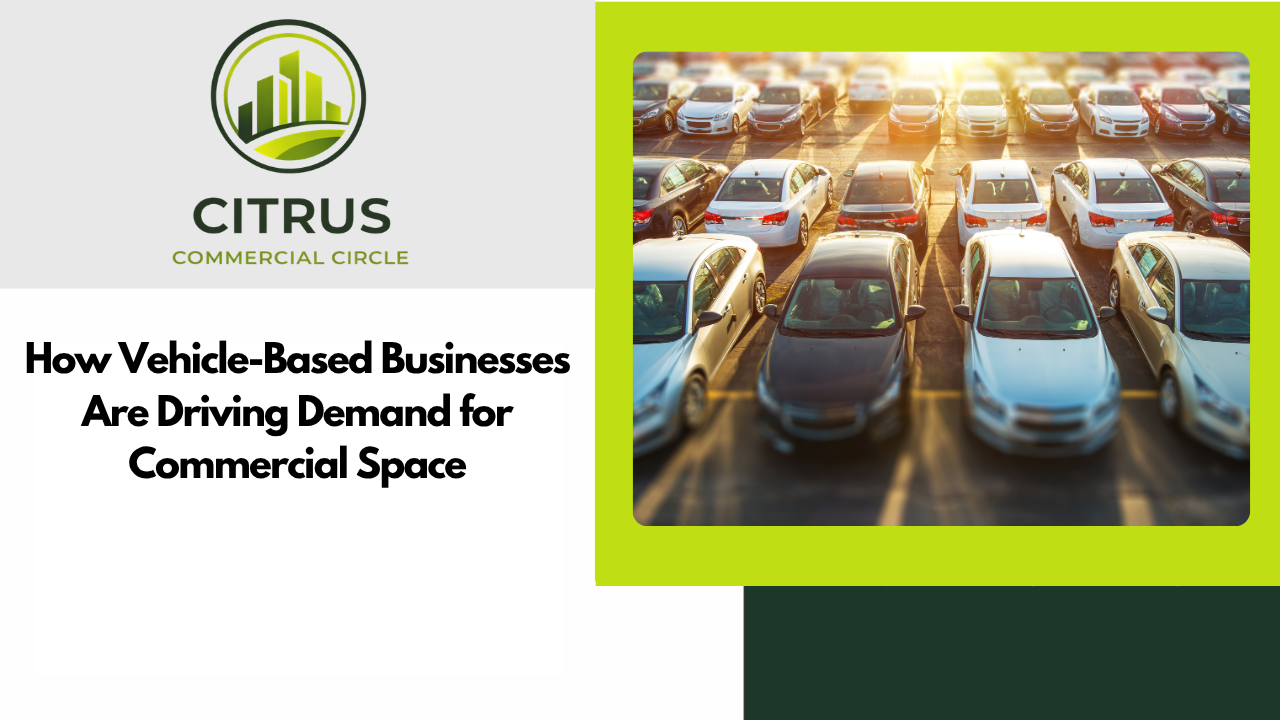
Used car dealerships and vehicle traders remain major occupiers of commercial land and forecourt space.
These businesses typically require:
- External display areas
- Customer parking
- Sales offices
- Security infrastructure
- High visibility
Major automotive retailers such as Arnold Clark, Motorpoint, Evans Halshaw, Lookers and Cinch operate within a sector where physical commercial space remains essential.
Despite digital vehicle sales growth, buyers still value physical viewing and collection.
Workshops remain in strong demand
Vehicle repair and servicing businesses continue to require workshop space.
Typical occupiers include:
- Mechanics
- MOT centres
- Tyre businesses
- Body shops
- Auto electricians
These businesses often prioritise:
- Industrial units
- Loading access
- Power supply
- Practical layouts
- Parking
Well-configured workshop space remains highly sought after.
At Citrus Commercial Circle, workshop-style industrial units often generate strong enquiry levels.
Recovery and roadside operators need secure compounds
Recovery and roadside assistance businesses frequently require secure compounds for:
- Vehicle storage
- Recovery trucks
- Temporary holding
- Salvage operations
Companies such as AA Breakdown Services, RAC Breakdown Cover, Green Flag and National Vehicle Recovery Service rely heavily on operational space to support their services.
Secure commercial yards remain particularly important for this sector.
Delivery businesses continue expanding
The growth of delivery services has significantly increased demand for vehicle-friendly commercial space.
Delivery operators often require:
- Van parking
- Fleet storage
- Dispatch facilities
- Loading areas
- Operational yards
Companies such as DPD UK, Yodel and FedEx UK continue driving demand for logistics-focused commercial property.
Vehicle access remains central to operational success.
Fleet operators need scalable premises
Businesses operating multiple vehicles often require scalable commercial sites.
This may include space for:
- Vehicle parking
- Maintenance
- Charging infrastructure
- Administration
- Staff facilities
As fleets grow, demand for larger and better-equipped premises often follows.
This trend is contributing to strong occupier demand.
EV adoption is creating new requirements
Electric vehicles are beginning to reshape automotive property requirements.
Vehicle-based businesses increasingly consider:
- Charger installation
- Electrical capacity
- Future-proof infrastructure
Manufacturers such as Tesla UK, BYD UK, Polestar UK and Kia UK Electric Range continue accelerating EV adoption.
Commercial premises increasingly need to accommodate this transition.
Security remains critical
Vehicle-based businesses often store high-value assets onsite.
Security features frequently required include:
- Fencing
- CCTV
- Security gates
- Lighting
- Controlled access
Secure compounds and yards remain among the most desirable property types for vehicle occupiers.
Strong security can reduce both operational risk and insurance exposure.
Accessibility is non-negotiable
Vehicle-based occupiers typically prioritise location based on road access.
Key requirements often include proximity to:
- Motorways
- A-roads
- Major transport corridors
- Customer catchments
Properties with poor vehicle access often struggle to meet occupier requirements.
Accessibility remains one of the strongest demand drivers in this sector.
Supply of suitable sites remains limited
One of the biggest challenges for vehicle-based occupiers is finding suitable stock.
Commercial properties with:
- External yard space
- Forecourts
- Secure compounds
- Vehicle circulation
remain relatively scarce.
Planning restrictions and redevelopment pressures continue limiting supply.
This supply shortage supports strong demand and competitive pricing.
Bury and North Manchester remain strong vehicle markets
Vehicle-based businesses remain highly active across:
- Bury
- Rochdale
- Bolton
- Oldham
- Salford
- North Manchester
The region benefits from:
- Strong motorway access
- Large customer catchments
- Established industrial stock
- Competitive costs
These advantages continue attracting automotive and vehicle-related occupiers.
At Citrus Commercial Circle, vehicle-based enquiries remain among the strongest within our commercial portfolio.
Citrus Commercial Circle’s market insight
At Citrus Commercial Circle, we understand the specific property requirements of vehicle-based businesses.
Our experience allows us to:
- Identify suitable operational sites
- Understand occupier priorities
- Advise investors on demand trends
- Support landlords in maximising site value
Vehicle-based occupiers remain one of the most important demand drivers in today’s commercial market.
Final thoughts
Vehicle-based businesses continue driving strong demand for commercial space because their operations depend heavily on practical, secure, and accessible premises.
From forecourts and workshops to compounds and fleet depots, these occupiers require specialised property that remains limited in supply.
As logistics, automotive services, EV adoption, and delivery operations continue growing, demand for vehicle-friendly commercial space is likely to remain exceptionally strong.
At Citrus Commercial Circle, we are proud to help occupiers, landlords, and investors across Bury and North Manchester identify commercial property opportunities that support long-term operational success.
Based in Bury. Active across North Manchester. Always on your side.
Call us today: 0161 383 1806
Email: info@citruscommercialcircle.co.uk
Visit: citruscommercialcircle.co.uk
Let’s unlock the full potential together.
Citrus Commercial Circle – Where standards meet success.